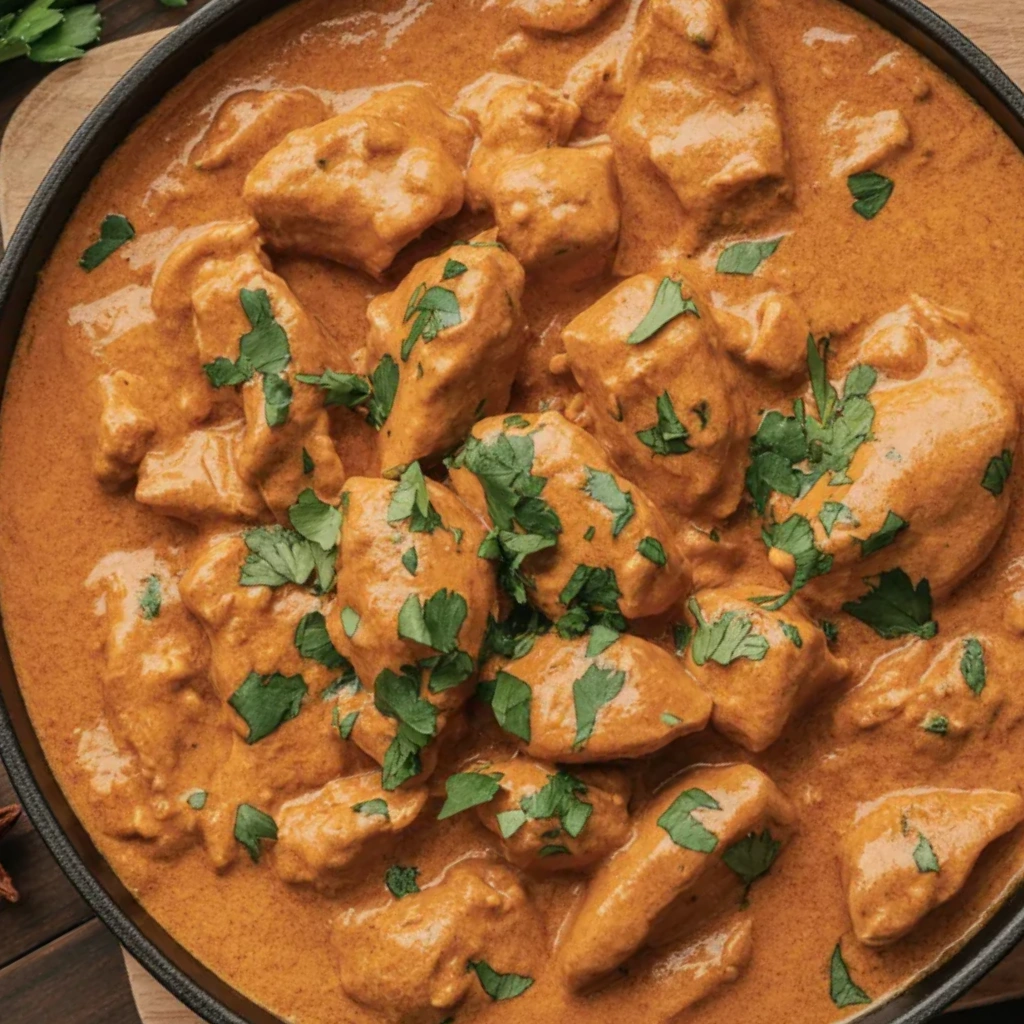
The first time I ever made butter chicken, I had no idea what I was getting myself into. I remember standing in my small kitchen with a list of unfamiliar spices, second-guessing every step, and wondering if I was completely over my head. At the time, butter chicken felt like one of those dishes best left to restaurant kitchens — rich, complex, and full of layered flavors that seemed impossible to recreate at home. But I was determined. I had tasted a version during a chilly evening out, and the warmth, the creaminess, and the gentle spice stayed with me for days. I kept thinking, Why shouldn’t I be able to make this at home?
So I tried. My first attempt was… humbling. I rushed the marinade, skipped a few steps, and ended up with chicken that was tender but a sauce that felt flat and overly tomato-heavy. Still, there was something there. Enough promise to make me try again. Over time, through many batches, small tweaks, and more than a few messy stovetops, this butter chicken became a recipe I truly made my own. It turned into a comfort dish I leaned on when friends visited, when my family needed something cozy, or when I simply wanted to spend a slow afternoon cooking something deeply satisfying.
Now, this butter chicken feels like an old friend in my kitchen. It fills the house with warm spices, gently bubbling sauce, and the kind of aroma that draws everyone into the kitchen asking, “Is it ready yet?” And every time I make it, I’m reminded that sometimes the recipes that seem intimidating at first become the ones we treasure most.
Why You’ll Love This Recipe
- Rich, creamy, and packed with comforting flavor
- Surprisingly simple once you break it into steps
- Perfect for meal prep and even better the next day
- Family-friendly with customizable spice levels
- A restaurant-quality dish made right at home
Ingredients You’ll Need
For this butter chicken, I’ve learned that quality ingredients make a noticeable difference, but perfection isn’t required. Use what you have, adjust where needed, and trust your instincts.
For the chicken marinade:
- Boneless, skinless chicken thighs or breasts – I usually reach for thighs because they stay tender and juicy, even after simmering.
- Plain yogurt – This tenderizes the chicken and adds subtle tang.
- Garlic and fresh ginger – I always recommend fresh if possible; the flavor is brighter and warmer.
- Garam masala, ground cumin, ground coriander, turmeric, and paprika – This spice blend creates the backbone of the dish.
- Salt and lemon juice – These wake everything up and balance the richness.
For the sauce:
- Butter – Real butter. This is not the time to substitute.
- Onion – Finely chopped so it melts into the sauce.
- More garlic and ginger – Because once is never enough.
- Tomato purée or crushed tomatoes – This forms the heart of the sauce.
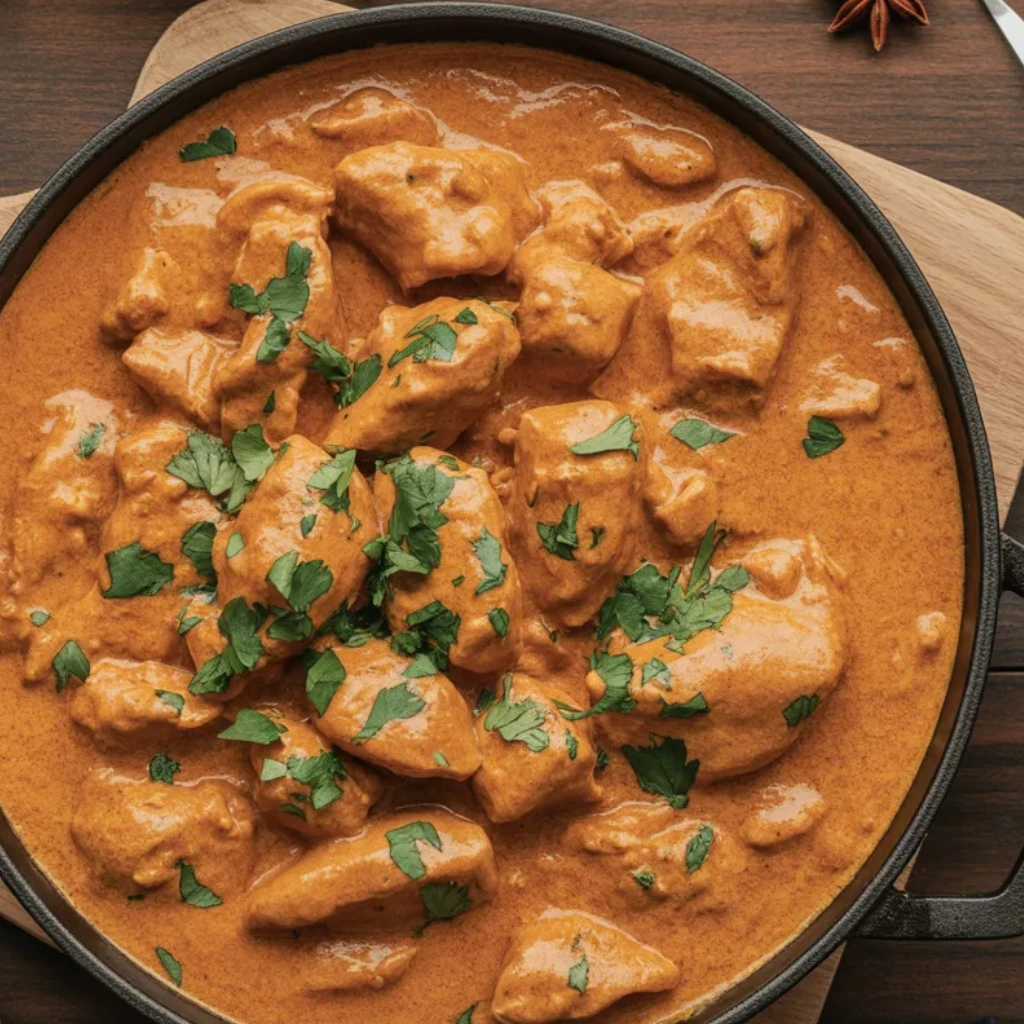
- Heavy cream – This gives butter chicken its signature velvety texture.
- Additional spices – A second layer builds depth.
- Sugar (optional) – Just a pinch if your tomatoes are too acidic.
- Fresh cilantro – For brightness at the end.
If I’m short on fresh ginger, I’ve used ginger paste in a pinch, and when cream was missing, I once substituted full-fat coconut milk. It created a slightly different flavor, but it was still comforting and delicious in its own way.
How to Make It (Step-by-Step Instructions)
Step 1: Marinate the Chicken
This step is where the magic begins. In a large bowl, mix the yogurt, garlic, ginger, spices, salt, and lemon juice until smooth. Add the chicken and gently toss to coat every piece. I like to use my hands here because it helps ensure everything is evenly distributed. Cover and refrigerate for at least 30 minutes, though overnight is even better if you can plan ahead. The longer the chicken sits, the deeper the flavor becomes.
Step 2: Cook the Chicken
Heat a large skillet or pan over medium-high heat and add a little oil. Working in batches, cook the marinated chicken until golden on the outside and mostly cooked through. It doesn’t need to be perfect yet, as it will finish cooking in the sauce. Transfer the chicken to a plate and set aside. Those browned bits in the pan? Don’t touch them — they’re flavor gold.
Step 3: Build the Sauce Base
In the same pan, lower the heat to medium and add butter. Once melted, stir in the chopped onions. Cook slowly until they soften and turn lightly golden. This step takes patience, but it’s worth it. Rushing the onions can leave the sauce tasting harsh rather than mellow and rich. Add the garlic and ginger and cook until fragrant, just about a minute.
Step 4: Add the Tomatoes and Spices
Stir in the tomato purée and remaining spices. Let the mixture simmer gently for 10 to 15 minutes, stirring occasionally. This step allows the tomatoes to cook down, lose their raw edge, and meld with the spices. If the sauce thickens too much, a splash of water or chicken broth loosens it beautifully.
Step 5: Blend (Optional but Recommended)
For a truly silky sauce, I often blend the mixture using an immersion blender or regular blender. This step transforms the texture, making the sauce smooth and luxurious. If you prefer a more rustic finish, you can skip this.
Step 6: Add Cream and Chicken
Lower the heat and stir in the cream. Then add the cooked chicken along with any juices that collected on the plate. Let everything simmer gently for another 10 minutes, allowing the flavors to come together. Taste and adjust salt, sweetness, or spice level as needed.
Step 7: Finish and Serve
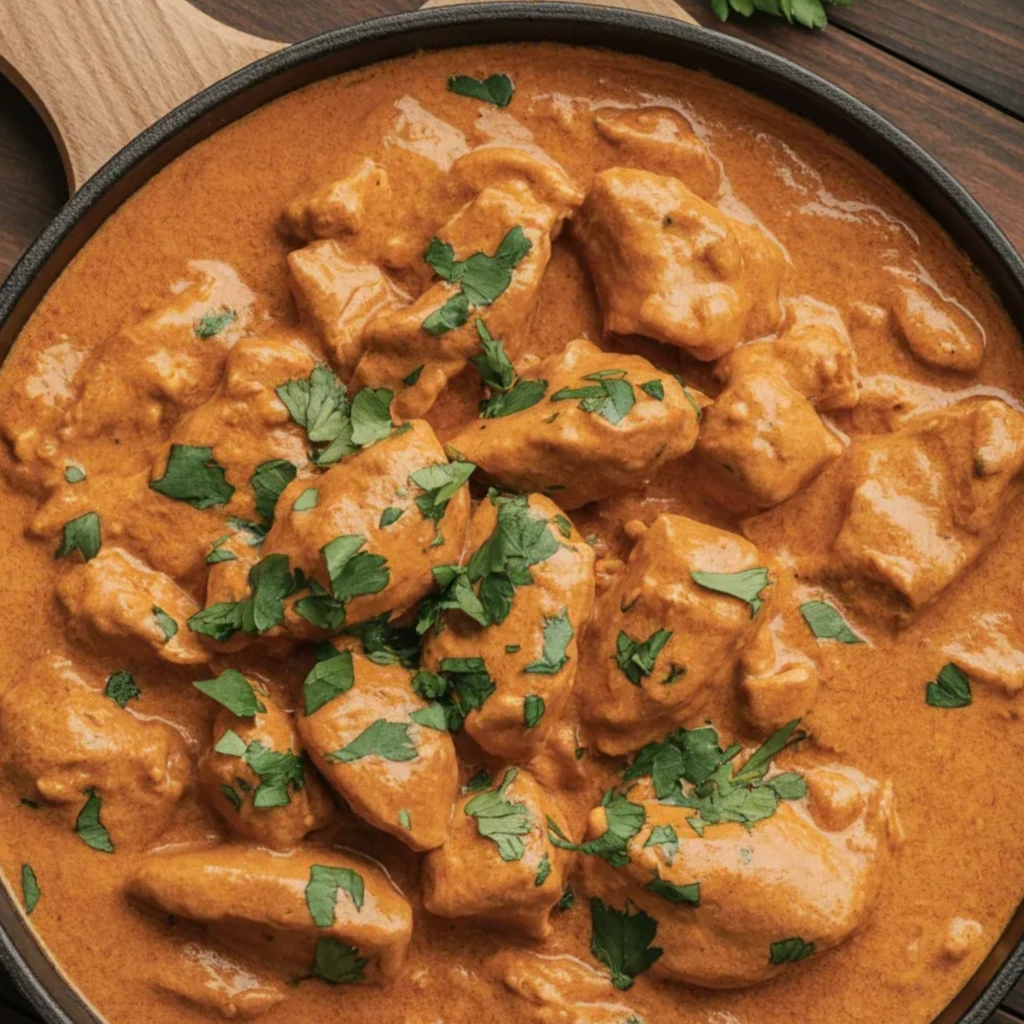
Sprinkle with fresh cilantro just before serving. This final touch lifts the dish and balances the richness beautifully.
Expert Tips for the Best Results
Through many batches and a few mistakes, I’ve learned that patience is what truly makes butter chicken shine. Letting the onions soften fully, allowing the tomatoes to simmer until rich and mellow, and giving the chicken time to soak in the marinade all contribute to a final dish that tastes deeply layered instead of rushed. Don’t be afraid to adjust seasoning gradually and trust your senses — smell, taste, and texture will guide you better than any rigid rule ever could.
Variations & Substitutions
Some of my favorite kitchen moments have come from making do with what I had on hand. I’ve swapped cream for coconut milk when dairy wasn’t an option, used leftover rotisserie chicken for a faster version, and even added roasted cauliflower once when I needed a meatless dinner. Every variation taught me that this recipe is wonderfully forgiving, and sometimes those last-minute changes create a new favorite version altogether.
Serving Suggestions
Butter chicken is one of those dishes that naturally invites company. I love serving it over fluffy basmati rice, with warm naan or soft flatbread to soak up every last bit of sauce. A simple cucumber salad or lightly spiced roasted vegetables on the side adds freshness and balance. It’s perfect for family dinners, cozy date nights at home, or even casual gatherings where everyone ends up hovering near the stove, sneaking tastes.
Storage & Reheating Instructions
Leftovers are one of the quiet joys of this dish. I store butter chicken in airtight containers in the refrigerator for up to four days. The flavors deepen overnight, making the second-day version even better. When reheating, I warm it gently over low heat, stirring often, and add a small splash of cream or water if the sauce thickens too much. Slow reheating preserves the silky texture and prevents separation.
Recipe FAQs (Answered by Clara)
Can I make this ahead of time?
You sure can. I often prepare it in the morning, cover it tightly, and pop it in the fridge. It actually tastes better after resting, which makes it ideal for entertaining or busy weeknights.
What’s the best spiralizer to use?
For this recipe, a spiralizer isn’t necessary. When I want vegetable noodles alongside it, I simply use a handheld spiralizer or even a vegetable peeler for wide ribbons. Simple tools often work just as well.
Can I serve it cold?
While I personally love it warm, I’ve eaten leftovers chilled straight from the fridge during busy days, and it’s surprisingly satisfying. The flavors remain rich, though the sauce thickens noticeably when cold.
How do I make it less watery?
Simmering the sauce uncovered allows excess moisture to evaporate naturally. I also recommend using tomato purée rather than fresh tomatoes, which release more liquid and can dilute the sauce.
Conclusion
Butter chicken has taught me patience, curiosity, and the joy of trusting my instincts in the kitchen. It’s one of those recipes that reminds me cooking doesn’t have to be perfect — it just has to be made with care. I hope this dish brings warmth to your table, comfort to your evenings, and maybe even a new favorite memory in your kitchen. If you try it, I’d love to hear how it turned out for you. Share your tweaks, your triumphs, and even your kitchen mishaps — because that’s where the real stories live.
Nutrition Information (Optional)
Approximate per serving:
Calories: 480
Protein: 32g
Fat: 32g
Carbohydrates: 15g
Fiber: 3g
Sugar: 6g
Butter Chicken
Ingredients
For the Chicken Marinade:
- 1½ lbs boneless chicken thighs or breasts cut into cubes
- ½ cup plain yogurt
- 1 tablespoon lemon juice
- 1 tablespoon ginger-garlic paste
- 1 teaspoon garam masala
- 1 teaspoon paprika or Kashmiri chili powder
- ½ teaspoon turmeric
- ½ teaspoon salt
For the Sauce:
- 3 tablespoons butter
- 1 tablespoon oil
- 1 small onion finely chopped
- 3 cloves garlic minced
- 1 tablespoon fresh ginger grated
- 1 can 15 oz crushed tomatoes or tomato puree
- 1 teaspoon ground cumin
- 1 teaspoon ground coriander
- 1 teaspoon garam masala
- ½ teaspoon chili powder optional, for heat
- ¾ cup heavy cream
- Salt to taste
- Fresh cilantro for garnish
Instructions
- In a bowl, mix all marinade ingredients. Add chicken and coat well. Marinate for at least 30 minutes (or up to overnight).
- Heat oil in a large skillet or pan over medium-high heat. Cook marinated chicken until lightly browned and nearly cooked through. Remove and set aside.
- In the same pan, melt butter. Add onion and cook until soft and golden.
- Stir in garlic and ginger; cook for 1 minute.
- Add tomatoes, cumin, coriander, garam masala, and chili powder. Simmer for 10–15 minutes until thick and rich.
- Stir in cream and return chicken to the pan. Simmer for 5–7 minutes until chicken is fully cooked and sauce is velvety.
- Garnish with fresh cilantro and serve hot.
Notes
tes
- Best chicken cut: Thighs stay extra juicy and tender.
- Extra smooth sauce: Blend sauce before adding cream.
- Spice control: Adjust chili powder to taste.
- Serving ideas: Serve with naan, basmati rice, or jeera rice.
- Storage: Refrigerate leftovers up to 4 days or freeze up to 3 months