There are certain recipes that arrive in your life almost by accident, yet stay with you for years—quietly working their way into weeknight dinners, summer cookouts, and those last-minute meals that need a burst of life. Chimichurri was one of those late discoveries for me. I remember the exact moment it happened: I was standing in a tiny backyard in late July, helping a friend prepare dinner for a casual get-together. There was nothing fancy about it—just a few mismatched plates, a charcoal grill someone insisted they knew how to use, and a cooler that doubled as a prep station. My job was to slice bread and “make something green” to spoon over the grilled steak.
I had heard of chimichurri, of course, but I had never made it, and I certainly didn’t know how transformative it would be. My friend handed me a cutting board, a knife that probably needed sharpening two years earlier, and a bunch of parsley that was halfway wilted. I tried to hide the panic behind my best host-smile, but inside I was thinking, “What am I supposed to do with this?” Somehow, I pulled together a rustic version of chimichurri, tasting and adjusting as the sun dipped behind the fence. When we finally spooned it over the sizzling slices of meat, everyone paused after the first bite. It wasn’t the steak that stole the show—it was the sauce. Something about the brightness of the herbs, the warmth of garlic, the soft burn of vinegar and chili flakes reminded us all that simple food, when balanced just right, hits in a way nothing else does.
After that night, I went home determined to perfect my own version. Over time, with countless tweaks, flavor experiments, and every possible pairing I could think of, this chimichurri became part of my kitchen’s regular rhythm. It’s bold, fresh, and alive—just as it should be. And today, I’m sharing my favorite version with you.

Why You’ll Love This Recipe
• Takes just minutes to make
• Uses affordable, everyday ingredients
• Brightens almost any protein or vegetable
• Perfect for meal prep and make-ahead dinners
• Naturally dairy-free and flexible for substitutions
• Packs huge flavor without extra effort
Ingredients You’ll Need
• Fresh parsley: The heart of any classic chimichurri. I prefer flat-leaf parsley over curly because it has a more pronounced flavor and softer texture. If you buy parsley too far ahead and it starts to droop, trim the stems and let it stand in cold water for a few minutes. It perks right up.
• Fresh cilantro (optional but encouraged): I love adding just a handful because it rounds out the flavor without overpowering the parsley. If you’re cilantro-averse or cooking for someone who is, simply skip it and add a bit more parsley.
• Garlic: Fresh garlic is non-negotiable here. I’ve tried pre-minced garlic from the jar when I was in a pinch, and the flavor just doesn’t have the same bite. Start with three cloves, then adjust depending on how bold you want the sauce to be.
• Red wine vinegar: This is what gives chimichurri its signature tang. I’ve used white wine vinegar and even sherry vinegar in emergencies, and both work, though red wine vinegar brings that familiar sharpness I love.
• Olive oil: Use a good-quality extra-virgin olive oil. It doesn’t need to be your fanciest bottle, but something peppery and rich works best.
• Dried oregano: I’ve tested this with fresh oregano, and while it’s lovely, dried oregano gives that deep, earthy base that balances the brightness of the herbs.
• Red pepper flakes: Adjust to taste. I usually start with half a teaspoon and build from there. If I’m serving guests who shy away from spice, I’ll err on the lower side.
• Salt and black pepper: Season gradually and taste as you go. Chimichurri should be assertive but not salty.
How to Make It (Step-by-Step Instructions)
Step 1: Prep the herbs.
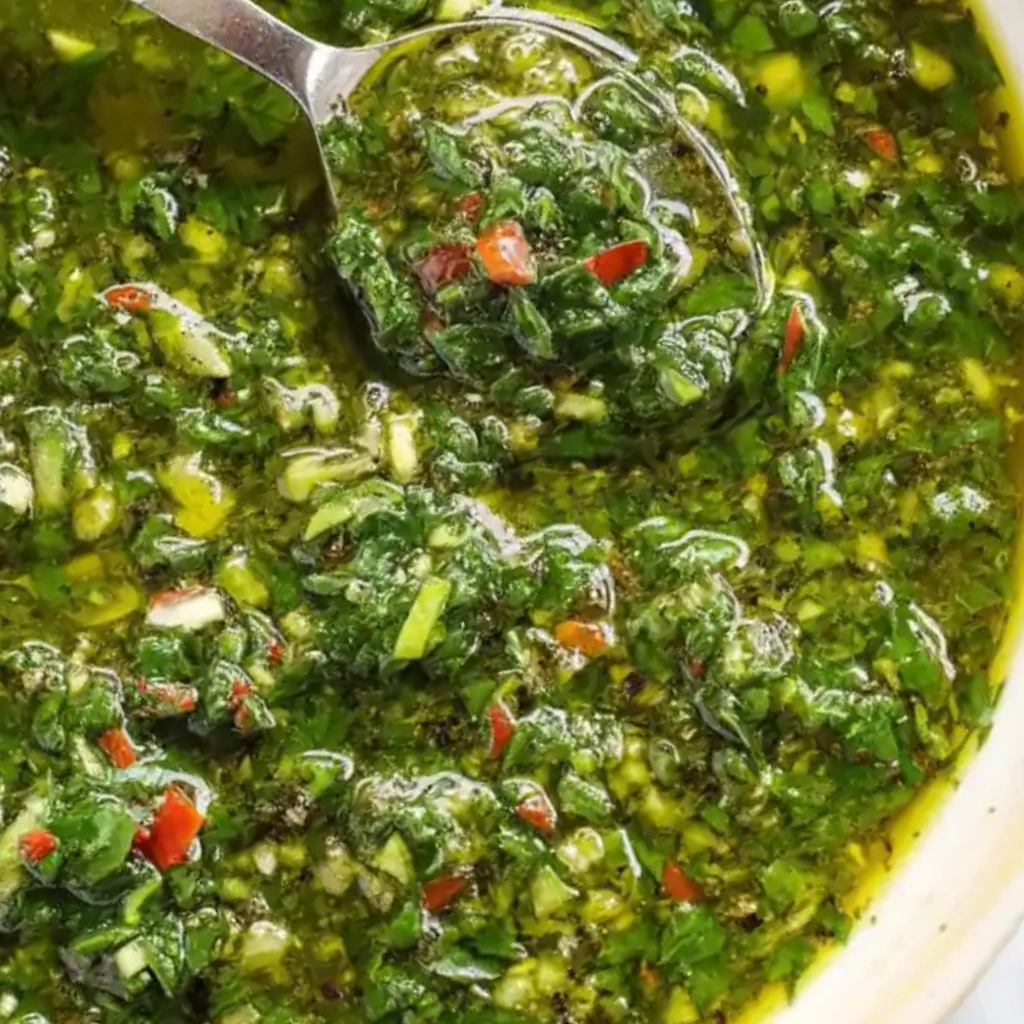
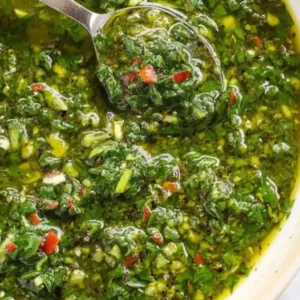
Start by washing and thoroughly drying the parsley and cilantro. Moisture makes the sauce watery, so I always pat the herbs with a clean kitchen towel. Remove the thick stems, but don’t stress over the smaller ones—they add flavor and structure. I prefer chopping the herbs by hand rather than using a food processor. It gives me more control over the texture and keeps the sauce from turning into a paste. Chimichurri should look loose and rustic, not like pesto.
Step 2: Mince the garlic.
Smash the garlic cloves under your knife, peel them, then mince finely. I’ve learned the hard way that leaving the garlic too chunky can make the sauce harsh, especially if it sits overnight. A fine mince blends better and mellows gently in the oil.
Step 3: Build the base.
In a medium bowl, combine the chopped parsley, cilantro (if using), garlic, oregano, and red pepper flakes. At this stage, everything should smell incredibly fresh. This dry mixture forms the flavor backbone of the sauce.
Step 4: Add the vinegar and seasonings.
Pour in the red wine vinegar and add a generous pinch of salt and pepper. The vinegar may seem strong at first, but once it mixes with the oil and herbs, the flavor settles beautifully. Taste the mixture now—before adding oil—to get a sense of how acidic you want the final result.
Step 5: Pour in the olive oil.
Gently stir in the olive oil until everything is loosely combined. The sauce should feel fluid, almost like it could be drizzled. If it’s too thick, add a splash more oil or vinegar. I usually start with half a cup of oil and adjust depending on how absorbent the herbs are that day.
Step 6: Rest the sauce.
This might be the hardest part, but chimichurri needs at least 20 to 30 minutes to settle. The flavors soften, mingle, and turn into something more cohesive. If you taste it too early, you might think it’s too sharp or too spicy. Give it time. If anything, it tastes even better after a few hours in the fridge.
Step 7: Adjust before serving.
Right before serving, give the sauce a final stir and taste again. Sometimes I add a splash more vinegar or a pinch more salt depending on what I’m pairing it with. Remember that chimichurri is meant to cut through richness, whether that’s steak, chicken, or roasted vegetables.
Expert Tips for the Best Results
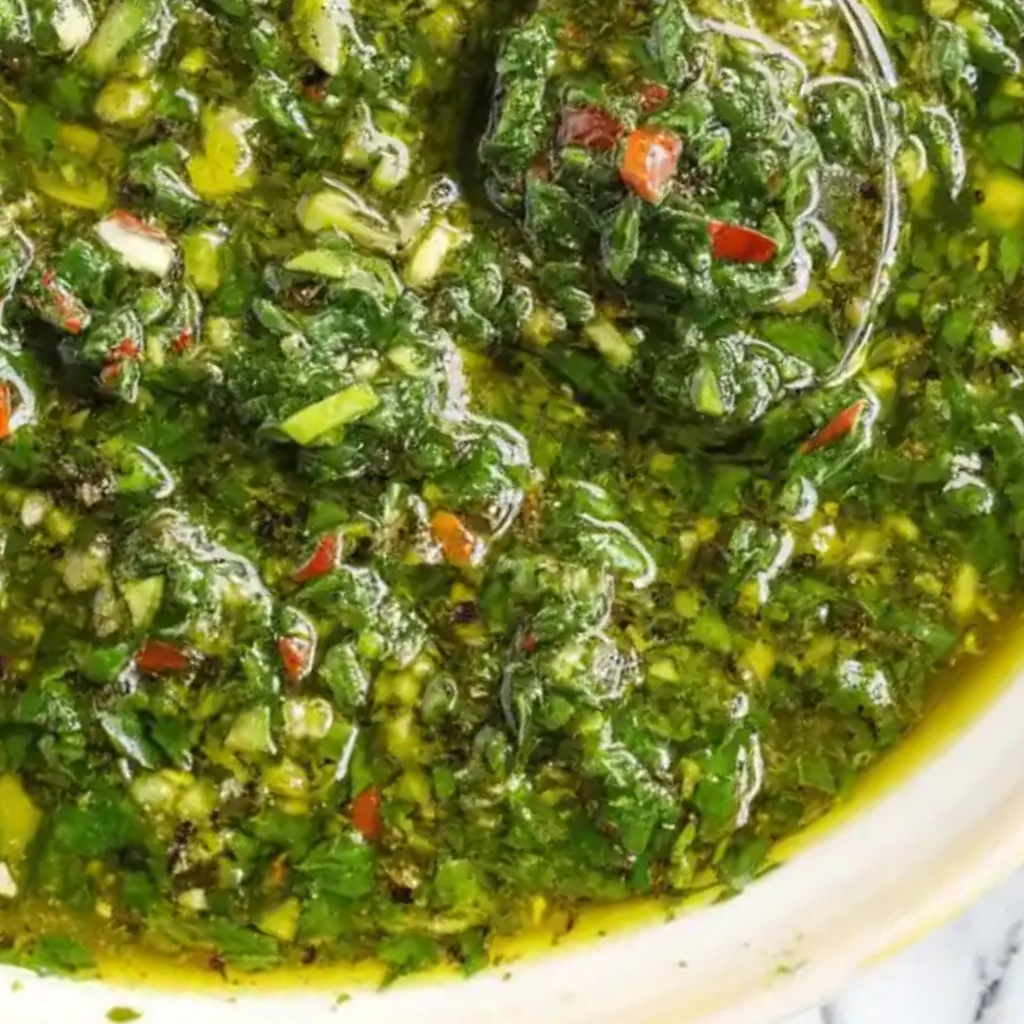
One of the biggest lessons I’ve learned with chimichurri is not to rush the chopping or the resting time. When herbs are chopped too finely or blitzed in a processor, the sauce can turn muddy and lose its grassy freshness, so hand-chop everything and keep the pieces distinct. Resting is equally important because the raw garlic needs time to mellow and the herbs need time to hydrate in the oil; what tastes sharp at minute five becomes beautifully balanced at minute thirty. Also, don’t be afraid of acidity—chimichurri should brighten the dish it touches, not disappear into it. Season gradually, taste often, and trust your palate.
Variations & Substitutions
Over the years, I’ve experimented with countless tweaks based on what I had on hand. Once, I ran out of parsley halfway through and had to rely on cilantro alone, and the result was unexpectedly vibrant. I’ve swapped red wine vinegar for lemon juice when I needed something a bit softer. I’ve even added finely diced shallot on nights when I wanted extra bite. And if you prefer a smoky twist, a pinch of smoked paprika changes the entire personality of the sauce in a very welcome way. Chimichurri is incredibly forgiving, so feel free to make it your own.
Serving Suggestions
Chimichurri is famously paired with grilled steak, but its uses go far beyond that. I love drizzling it over roasted chicken thighs, spooning it onto grilled shrimp, or tossing it with warm roasted potatoes just before serving. It’s also wonderful as a marinade, though I usually reserve a fresh batch for spooning over the finished dish so the herbs stay bright. If you’re serving a crowd, set out a bowl with a small spoon and watch it disappear faster than you’d expect.
Storage & Reheating Instructions
I keep leftover chimichurri in an airtight jar in the refrigerator for up to five days. The herbs will darken slightly as they sit, but the flavor remains bright. The oil tends to solidify in the cold, so I simply let it sit at room temperature for 10 to 15 minutes and give it a good stir before using. I don’t recommend freezing it because the texture changes too much, but for short-term storage, it holds beautifully.
Recipe FAQs (Answered by Clara)
Can I make this ahead of time?
You sure can. I often prepare it in the morning, cover it tightly, and pop it in the fridge. It actually tastes better after resting.
What’s the best spiralizer to use?
Since this recipe doesn’t require a spiralizer, I’ll share what I do use when I want thin ribbons of vegetables to serve underneath chimichurri. I have a simple handheld julienne peeler that gives me long, thin strips without needing to pull out another appliance.
Can I serve it cold?
Absolutely. Chimichurri is meant to be served at room temperature or chilled slightly, especially alongside grilled foods. Cold chimichurri over warm steak or chicken is a perfect contrast.
How do I make it less watery?
The key is drying your herbs thoroughly and chopping them by hand. If you find the sauce too thin, add a little more olive oil or reduce the vinegar slightly. Resting also helps the mixture thicken naturally.
Conclusion
If you’ve never made chimichurri at home, I hope this recipe becomes the one that opens the door for you the way it did for me years ago. It’s simple, vibrant, and endlessly useful, and it brings a sense of freshness to meals that need just a little something extra. If you give it a try, I’d love to hear how it turned out for you. Leave a comment, share your version, or simply enjoy it with someone you love. Cooking at home should always feel like that—warm, welcoming, and wonderfully personal.
Nutrition Information
Approximate per tablespoon:
Calories: 85
Fat: 9g
Carbohydrates: 1g
Protein: 0g
Fiber: 0g
Sodium: 40mg
Chimichurri Sauce
Ingredients
- 1 cup fresh parsley finely chopped
- ¼ cup fresh cilantro finely chopped (optional but recommended)
- 4 cloves garlic minced
- ½ cup olive oil
- 2 tablespoons red wine vinegar
- 1 tablespoon lemon juice optional
- 1 teaspoon dried oregano
- ½ teaspoon crushed red pepper flakes adjust to taste
- ½ teaspoon salt
- ¼ teaspoon black pepper
Instructions
- In a medium bowl, combine the chopped parsley, cilantro, and minced garlic.
- Stir in the olive oil, red wine vinegar, lemon juice (if using), oregano, red pepper flakes, salt, and black pepper.
- Mix well until fully combined.
- Taste and adjust seasoning—add more vinegar for brightness or red pepper flakes for heat.
- Let the chimichurri rest for at least 10 minutes to allow flavors to develop.
- Serve spooned over grilled meats, vegetables, or use as a marinade.
Notes
- No cilantro? Traditional Argentine versions use only parsley; cilantro is optional.
- Texture: Chimichurri should be loose and oily, not thick like pesto. Add more oil if needed.
- Make ahead: Flavor improves after a few hours.
- Storage: Refrigerate in an airtight container for up to 1 week. Bring to room temperature before serving.
- Variations: Add shallots, swap vinegar for lime juice, or increase chili flakes for extra heat.