There are some recipes that don’t arrive in your life with fireworks. They slip in quietly, one bowl at a time, until you realize you can’t imagine your kitchen without them. That’s exactly how this Mediterranean salad became part of my regular rotation. Years ago, during one of those late summer weeks when it was simply too hot to cook anything complicated, I threw together a few vegetables I had left in the crisper, added olives and feta because they always make things better, and finished it with a quick lemony dressing. I didn’t think much of it at the time. But when I went back for a second helping, and then found myself craving it the next day, I knew I had stumbled onto something special.
Since then, this salad has shown up at weeknight dinners, weekend lunches, potlucks where I needed something dependable, and even quiet meals eaten straight from the bowl at the kitchen counter. I’ve tweaked it over the years, made mistakes, adjusted ratios, and learned what truly matters and what doesn’t. This isn’t a stiff, overly precious Mediterranean salad. It’s a living, breathing recipe that adapts to real life, just like the way most of us actually cook.
Why You’ll Love This Recipe
- It’s fresh, vibrant, and full of flavor without feeling heavy
- Comes together quickly with simple, everyday ingredients
- Naturally flexible depending on what you have on hand
- Tastes even better after it sits for a bit
- Works as a side dish or a light meal all on its own
Ingredients You’ll Need
This ingredient list looks straightforward, but every element plays a role. Over the years, I’ve learned that quality matters more than quantity here, and small choices can make a big difference.
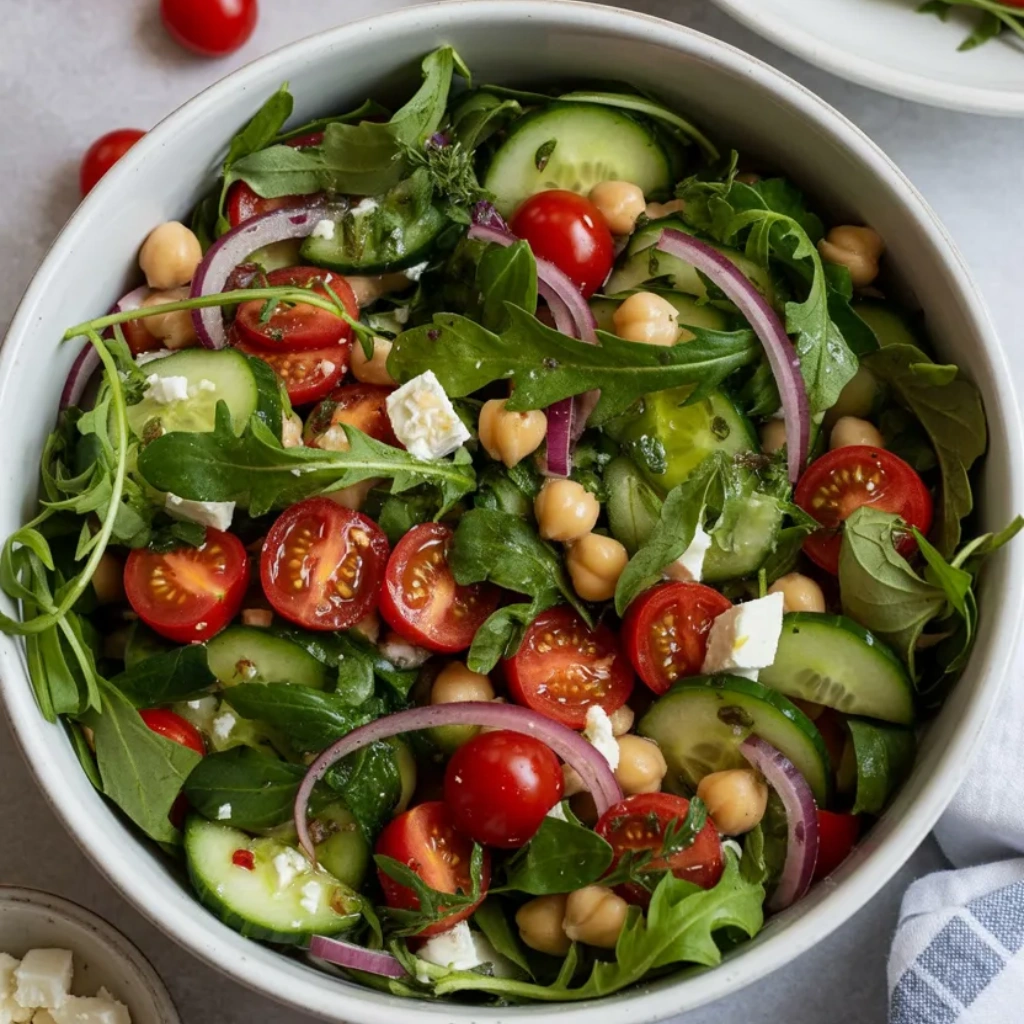
You’ll need ripe tomatoes, and I can’t stress ripe enough. I’ve made this salad with pale winter tomatoes before, and while it was fine, it wasn’t memorable. Cherry or grape tomatoes are my go-to because they stay juicy without turning mushy. Cucumbers are next, and I usually reach for English cucumbers because they’re less watery and don’t need peeling, but regular cucumbers work just fine if that’s what you have.
Red onion adds bite and balance. I used to add too much, thinking more flavor was better, but I’ve learned restraint here goes a long way. Kalamata olives bring that unmistakable Mediterranean depth. If you only have black olives, you can use them, but the flavor will be milder. Feta cheese is essential for me. I always buy it in a block and crumble it myself because it stays creamier and less salty than pre-crumbled versions.
Fresh parsley adds brightness, and sometimes I’ll throw in a bit of fresh oregano or dill if I have it. For the dressing, you’ll need good olive oil, fresh lemon juice, garlic, salt, and black pepper. I’ve tried bottled lemon juice in a pinch, but fresh really makes the salad sing.
How to Make It (Step-by-Step Instructions)
Step 1:
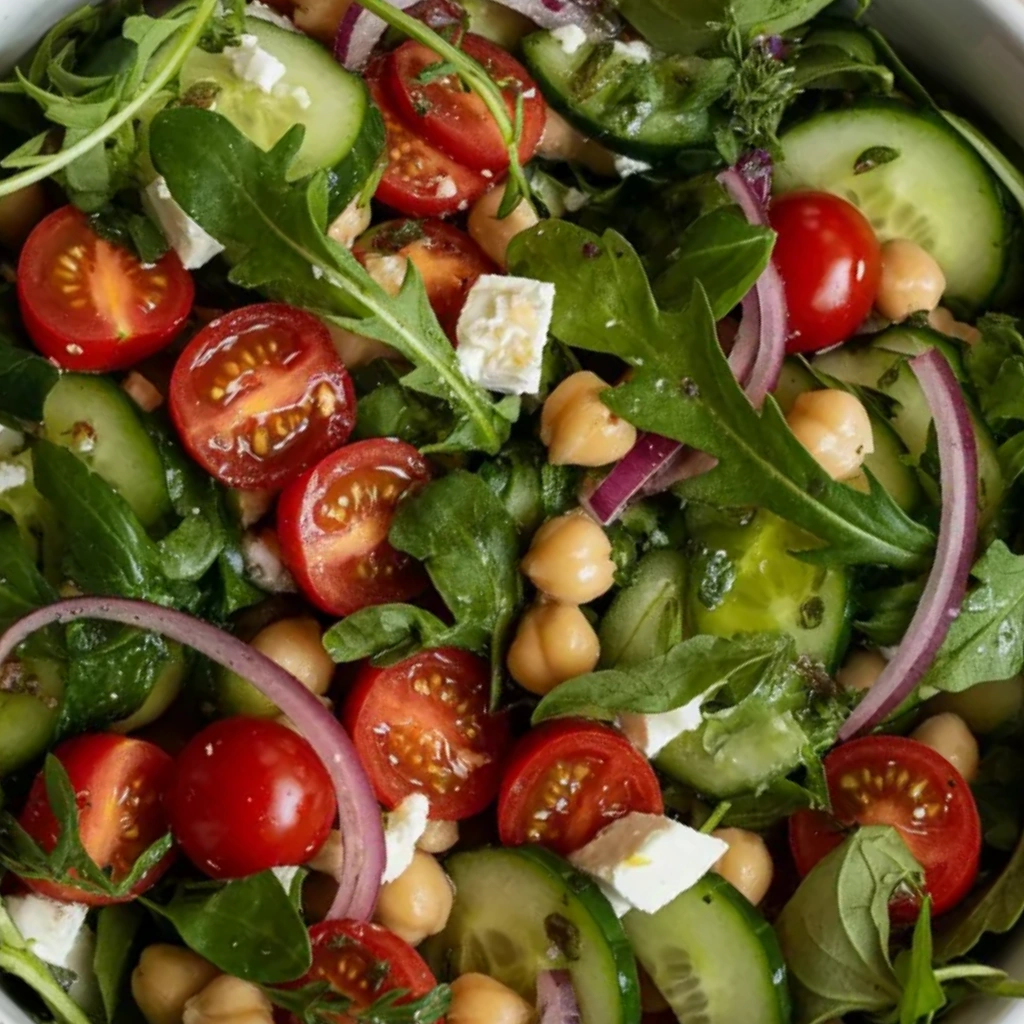
Start by preparing your vegetables. I like to chop everything before assembling so I’m not rushing at the end. Slice the tomatoes in half if they’re small, or into bite-sized chunks if they’re larger. Dice the cucumber into pieces that match the tomatoes so every bite feels balanced. Thinly slice the red onion, keeping the slices delicate rather than chunky.
Step 2:
Place all the chopped vegetables into a large bowl. This is where size matters. I’ve made the mistake of using a bowl that’s too small and ended up with ingredients spilling everywhere while I tried to toss. Give yourself room to mix gently without crushing anything.
Step 3:
Add the olives and crumble the feta over the top. I like to leave some larger chunks of feta because they create little pockets of creaminess throughout the salad. Sprinkle in the chopped parsley at this stage as well.
Step 4:
In a small bowl or jar, whisk together the olive oil, lemon juice, minced garlic, salt, and black pepper. Taste it before adding it to the salad. This is something I didn’t always do, and it took me a while to learn that adjusting the dressing first saves the whole dish. If it tastes good on its own, it will taste good on the salad.
Step 5:
Pour the dressing over the salad and toss gently. Use a large spoon or your hands if you’re careful. The goal is to coat everything lightly, not drown it. I always stop tossing just before I think it’s done, because the juices from the tomatoes will continue to mix with the dressing as it sits.
Expert Tips for the Best Results
After making this salad more times than I can count, I’ve learned that patience and restraint are what separate a good Mediterranean salad from a great one. Don’t rush the chopping, don’t overpower it with dressing, and don’t skip tasting as you go. Letting the salad rest for ten to fifteen minutes before serving gives the flavors time to settle and mingle, and using the best olive oil you can afford really does make a noticeable difference.
Variations & Substitutions
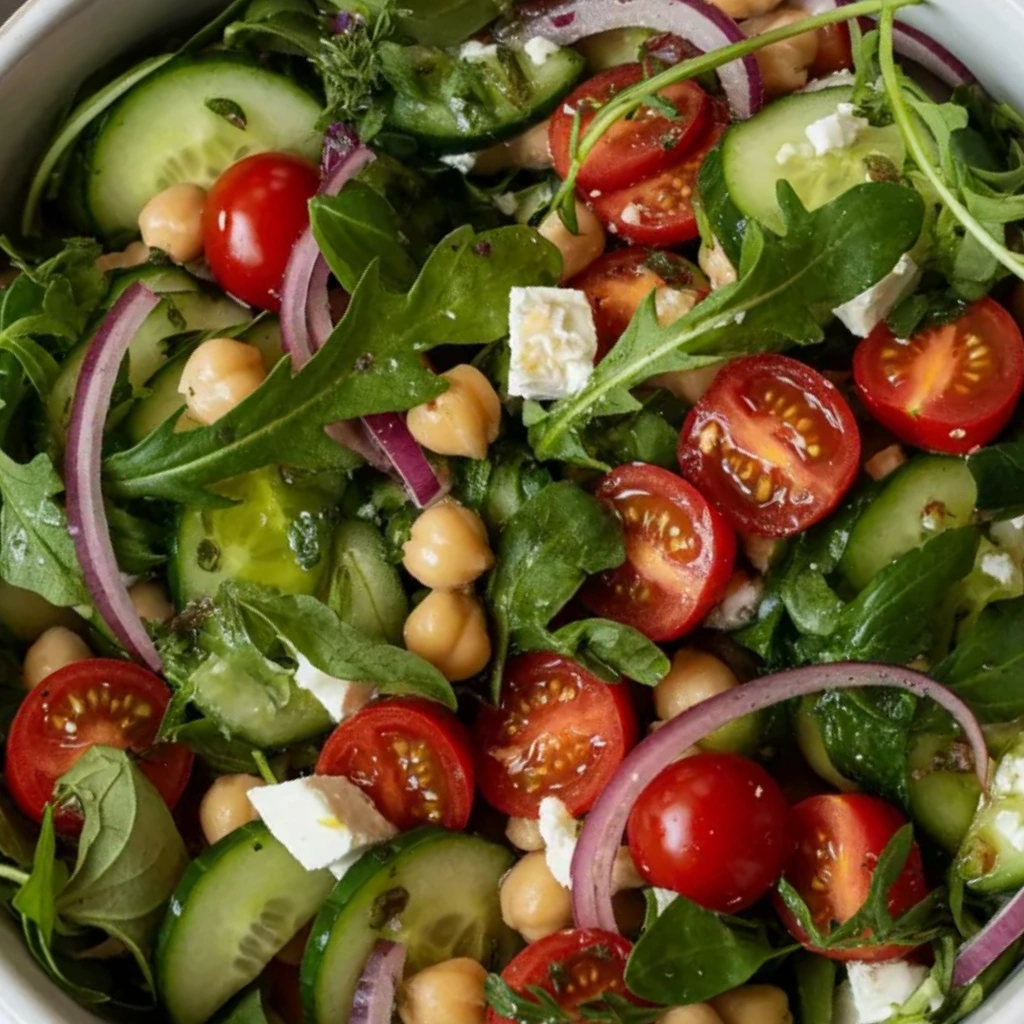
One of the reasons I love this salad is how forgiving it is. I’ve added chickpeas when I wanted something more filling, tossed in roasted red peppers when I had a jar open, and even used goat cheese instead of feta once when that’s all I had. That version was different, but still delicious. I’ve also made it without olives for guests who don’t love them, and no one complained. This recipe welcomes improvisation, and sometimes those last-minute changes end up becoming new favorites.
Serving Suggestions
I serve this Mediterranean salad alongside grilled chicken, fish, or lamb most often, but I’ve also enjoyed it with warm pita bread and a drizzle of hummus when I wanted something simple. It’s perfect for picnics, potlucks, or those evenings when you want dinner to feel light but still satisfying. I’ve even spooned leftovers over toasted bread the next day and called it lunch.
Storage & Reheating Instructions
This salad stores surprisingly well. I usually cover it tightly and keep it in the refrigerator for up to three days. The vegetables will soften slightly, and the flavors will deepen, which I actually enjoy. I don’t recommend reheating it, as this is meant to be enjoyed cold or at room temperature. If it looks a little watery after sitting, just give it a gentle stir and taste before serving.
Recipe FAQs (Answered by Clara)
Can I make this ahead of time?
You sure can. I often prepare it a few hours in advance, cover it, and let it rest in the fridge. The flavors improve as they sit, just be sure to give it a quick toss before serving.
What’s the best way to chop everything evenly?
I don’t use any special tools for this salad. A sharp knife and taking your time is all you need. Keeping the pieces roughly the same size helps every bite taste balanced.
Can I serve it cold?
Absolutely. I actually prefer it slightly chilled or at room temperature rather than straight from the fridge, where the flavors can feel muted.
How do I make it less watery?
Using English cucumbers helps, and salting the salad lightly after mixing rather than before keeps the vegetables from releasing too much liquid too quickly. If needed, you can drain off excess juice before serving.
Conclusion
This Mediterranean salad has earned its place in my kitchen because it shows up when I need it to, no matter the season or occasion. It’s simple without being boring, flexible without losing its soul, and always feels like something made with care. I hope you make it your own, adjust it to your taste, and maybe even pass it along to someone else. If you try it, I’d love to hear how it turned out in your kitchen. Sometimes the quiet recipes end up being the ones we treasure most.
Nutrition Information (Optional)
Approximate values per serving: calories 220, fat 17g, carbohydrates 10g, protein 5g, fiber 3g, sodium varies depending on olives and feta used.
Mediterranean Salad
Ingredients
- 2 cups cherry tomatoes halved
- 1 large cucumber diced
- ½ red onion thinly sliced
- ½ cup Kalamata olives pitted
- ½ cup crumbled feta cheese
- ¼ cup fresh parsley chopped
Dressing:
- 3 tablespoons extra virgin olive oil
- 2 tablespoons fresh lemon juice or red wine vinegar
- 1 clove garlic minced
- ½ teaspoon dried oregano
- Salt and black pepper to taste
Instructions
- In a large bowl, combine tomatoes, cucumber, red onion, olives, feta, and parsley.
- In a small bowl, whisk together olive oil, lemon juice, garlic, oregano, salt, and pepper.
- Pour dressing over salad and toss gently to combine.
- Taste and adjust seasoning if needed.
- Serve immediately or chill for 10 minutes before serving.
Notes
- Add protein: Grilled chicken, shrimp, or chickpeas.
- Cheese swap: Try goat cheese if preferred.
- Make ahead: Store dressing separately until ready to serve.
- Serving ideas: Pairs well with grilled meats or pita bread.
- Storage: Best enjoyed fresh; refrigerate up to 2 days.