I still remember the first time I tried to make pizza sauce from scratch. I was young, stubbornly confident, and absolutely convinced that all I needed was a can of tomatoes and a quick stir. That sauce turned out thin, sharp, and oddly metallic, and my pizza tasted more like a sad afterthought than the comforting meal I had imagined. But instead of giving up, I kept tinkering.
I tasted, adjusted, burned a few batches, under-seasoned others, and slowly learned what makes a pizza sauce truly sing. Over the years, that simple quest for the perfect sauce turned into one of my most treasured kitchen rituals.
Now, making pizza sauce feels like settling into a familiar rhythm, one that reminds me how powerful small, thoughtful details can be. This sauce has become the backbone of countless family dinners, late-night cravings, and weekend cooking projects, and I can’t wait to walk you through it.
Why You’ll Love This Recipe
- Made with simple, pantry-friendly ingredients
- Rich, balanced flavor without being heavy
- Easy to customize based on taste or what you have on hand
- Perfect for make-ahead meals and freezer-friendly
- Far better than anything store-bought
Ingredients You’ll Need
Good pizza sauce doesn’t need a long ingredient list. It just needs thoughtful choices and careful balance. Here’s what I use, along with the little lessons I’ve learned along the way.
Crushed Tomatoes or Tomato Purée – This is the foundation of the sauce, and it’s worth choosing a good-quality brand. I prefer crushed tomatoes for a slightly rustic texture, but purée works beautifully if you like a smoother finish. Over time, I learned that watery tomatoes can ruin an otherwise perfect sauce, so I always check the consistency before I begin.
Olive Oil – A splash of olive oil adds richness and helps carry the flavor of the herbs. I once skipped this thinking it wouldn’t matter, and the sauce tasted flat. That tiny bit of fat makes all the difference.
Garlic – Fresh garlic is non-negotiable in my kitchen. It brings warmth and depth. I used to overdo it, tossing in far too many cloves, but I’ve learned restraint gives better balance.
Onion – Finely minced onion adds sweetness and complexity. If you don’t love onion bits, grating it works beautifully.
Dried Oregano and Basil – These herbs define classic pizza flavor. I keep both in my pantry at all times, and I refresh them often since old herbs lose their magic.
Salt – A pinch here, a pinch there. Seasoning gradually ensures the flavors bloom without overpowering the tomatoes.
Sugar or Honey – Just a touch helps tame acidity. Some tomatoes need it, some don’t. Taste and trust your instincts.
Red Pepper Flakes (Optional) – When I want a little heat, I add a small pinch. It’s subtle but comforting.
Black Pepper – A gentle warmth that rounds everything out.
How to Make It (Step-by-Step Instructions)
Step 1: Warm the Olive Oil
Start by heating olive oil in a saucepan over medium heat. Let it warm slowly, not sizzle. I used to rush this step and crank the heat too high, but gentle warmth prevents bitter flavors and sets the tone for the entire sauce.
Step 2: Sauté the Onion and Garlic
Add your finely chopped onion and cook until it becomes soft and fragrant. This step builds sweetness and depth. Stir in the garlic and cook briefly, just until fragrant. Garlic burns easily, and I’ve learned the hard way that burnt garlic leaves a bitter aftertaste that no amount of tomatoes can fix.
Step 3: Add the Tomatoes
Pour in the crushed tomatoes or purée. Stir slowly and let the mixture come to a gentle simmer. The aroma at this point always reminds me why I love cooking — simple ingredients transforming into something comforting.
Step 4: Season Gradually
Add oregano, basil, salt, pepper, and red pepper flakes if using. Stir well and taste. This is where patience matters. I used to dump all my seasoning in at once, but layering flavors produces a richer sauce.
Step 5: Simmer and Develop Flavor
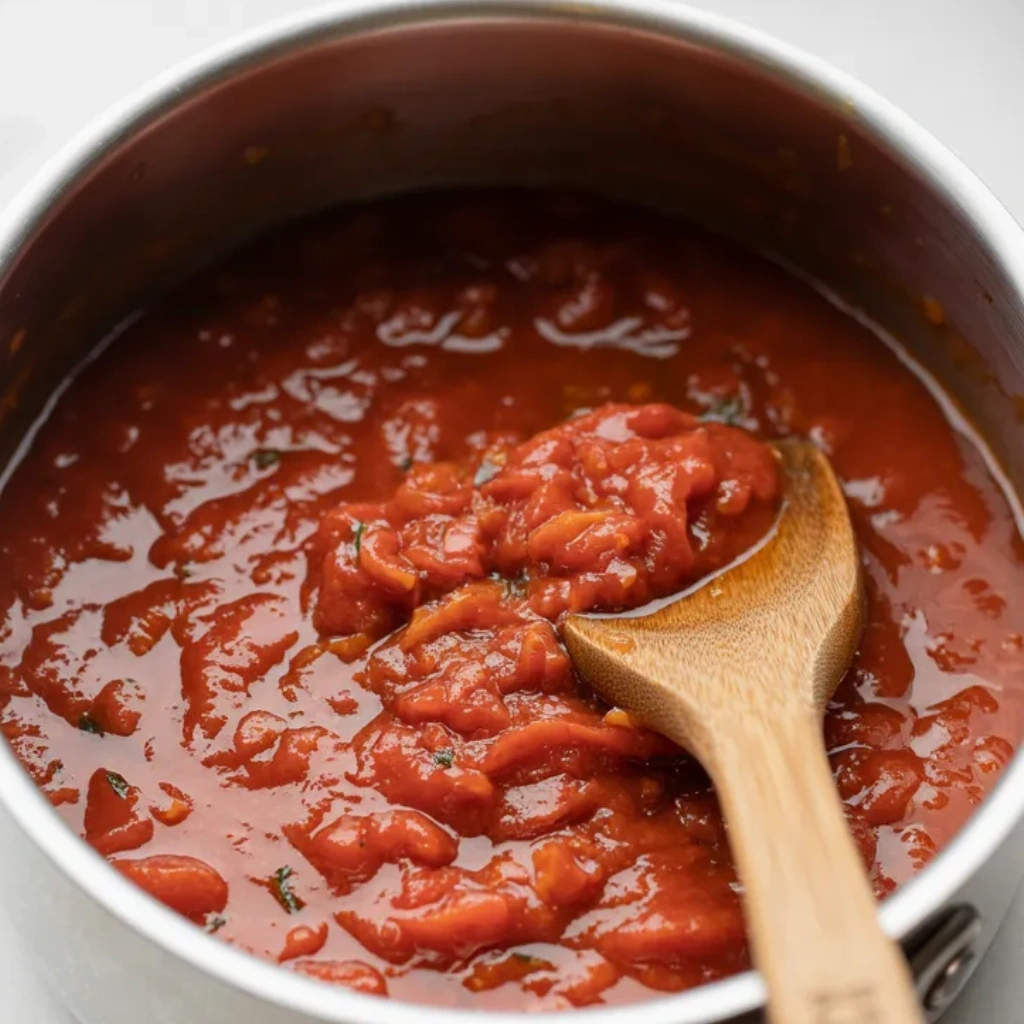
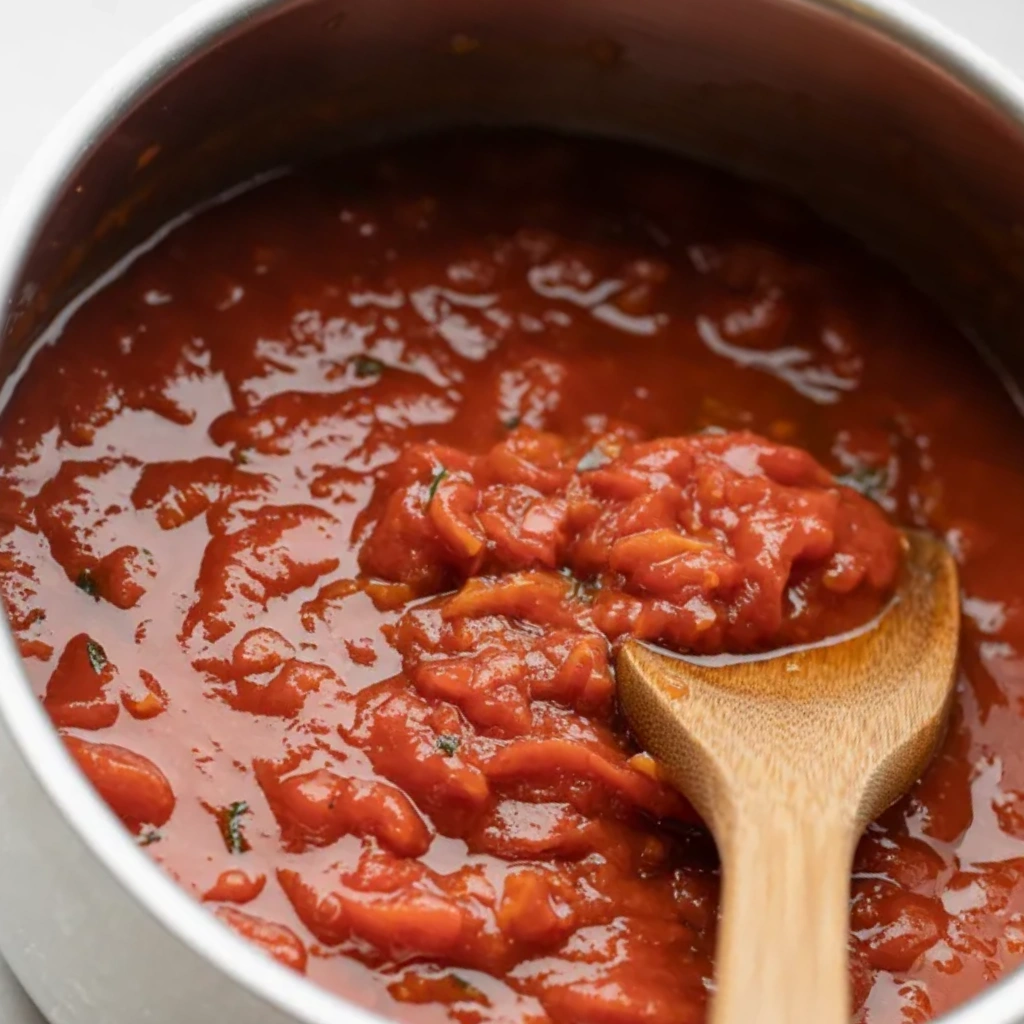
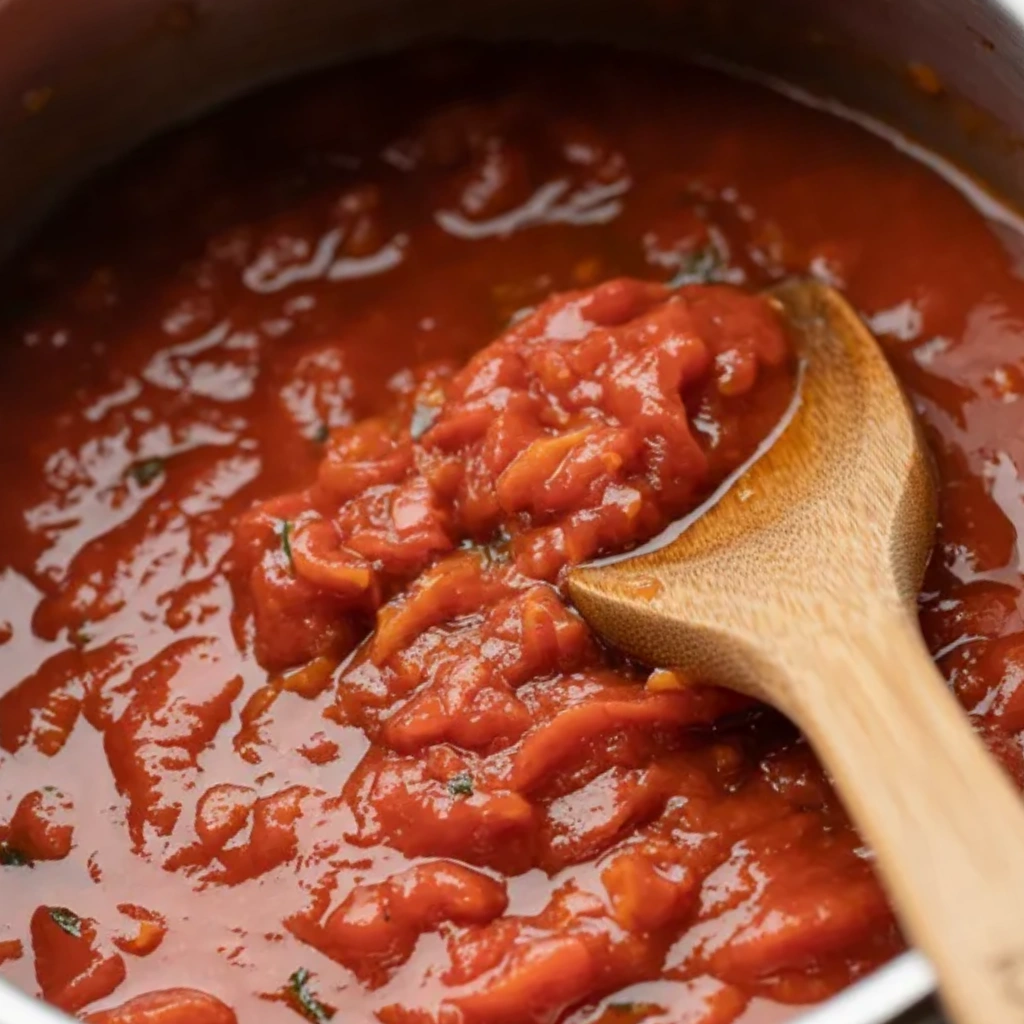
Lower the heat and let the sauce simmer gently for 20–30 minutes. Stir occasionally. As it cooks, it thickens slightly and develops deeper flavor. If it starts to look too thick, add a splash of water. If it seems thin, let it simmer uncovered a bit longer.
Step 6: Final Taste and Adjust
Taste again and add sugar or honey if needed. This tiny adjustment often transforms good sauce into great sauce. When it tastes balanced, rich, and comforting, it’s ready.
Expert Tips for the Best Results
The secret to truly great pizza sauce is patience and tasting as you go. Tomatoes vary wildly in sweetness and acidity, so relying on fixed measurements can lead to disappointment. I always encourage slow simmering, gentle heat, and frequent tasting. Let the sauce evolve naturally, adjusting salt and sweetness in tiny increments. And don’t rush cooling — sauce thickens slightly as it rests, so what seems thin in the pot often becomes perfect once cooled.
Variations & Substitutions
There have been plenty of nights when I opened my pantry only to realize I was missing something, and those moments often led to my favorite variations. Sometimes I add a splash of balsamic vinegar for subtle sweetness, or a spoonful of tomato paste for richness. Fresh herbs from my garden have replaced dried ones many times, and occasionally I blend roasted red peppers into the sauce for smoky depth. Pizza sauce is forgiving, and it loves creativity, so don’t be afraid to trust your instincts.
Serving Suggestions
This sauce is, of course, perfect for homemade pizza, but I use it far beyond that. It’s wonderful spread on flatbreads, spooned over chicken or eggplant before baking, stirred into pasta, or used as a dipping sauce for breadsticks. It turns ordinary weeknight meals into something special, and it’s especially comforting on evenings when you just need a warm, familiar dinner.
Storage & Reheating Instructions
I usually make a double batch because it stores beautifully. Keep the sauce in an airtight container in the refrigerator for up to five days. For longer storage, freeze it in portioned containers for up to three months. Reheat gently on the stove, stirring occasionally. The flavor deepens after resting, and the texture remains silky, making leftovers sometimes even better than the original batch.
Recipe FAQs (Answered by Clara)
Can I make this ahead of time?
You sure can. I often prepare it in the morning, cover it tightly, and pop it in the fridge. It actually tastes better after resting, as the flavors have time to mingle and settle.
What’s the best blender or food processor to use?
If you prefer ultra-smooth sauce, a simple immersion blender works wonderfully. I love it because it blends right in the pot and saves dishes. But honestly, a chunky rustic sauce has its own charm, and I skip blending more often than not.
Can I serve it cold?
You can, and I sometimes do, especially as a dipping sauce for warm bread. But I find the flavor shines brightest when gently warmed.
How do I make it less watery?
Let it simmer uncovered for a bit longer and stir occasionally. Good tomatoes help, but patience is the real solution here.
Conclusion
Homemade pizza sauce might seem like a small detail, but it has the power to completely transform your cooking. It’s one of those recipes that quietly builds confidence, reminding us that good food doesn’t need to be complicated. I hope this sauce becomes part of your kitchen routine the way it has become part of mine. If you try it, I’d love to hear how you make it your own. Cooking is always better when it’s shared.
Nutrition Information (Per Serving, Approximate)
Calories: 45
Carbohydrates: 7g
Protein: 1g
Fat: 2g
Fiber: 2g
Sugar: 4g
Pizza Sauce
Ingredients
- 1 can 15 oz crushed tomatoes or tomato sauce
- 2 tablespoons olive oil
- 2 cloves garlic minced
- 1 teaspoon dried oregano
- ½ teaspoon dried basil
- ½ teaspoon onion powder
- ½ teaspoon sugar optional, balances acidity
- ½ teaspoon salt
- ¼ teaspoon black pepper
- ¼ teaspoon red pepper flakes optional
Instructions
- Heat olive oil in a small saucepan over medium heat.
- Add garlic and sauté for 30 seconds until fragrant.
- Stir in crushed tomatoes, oregano, basil, onion powder, sugar, salt, pepper, and red pepper flakes.
- Simmer uncovered for 10–15 minutes, stirring occasionally, until slightly thickened.
- Taste and adjust seasoning as needed.
- Let cool slightly before spreading on pizza dough.
Notes
- No-cook option: Mix all ingredients and use immediately for a fresher taste.
- Smooth sauce: Blend with an immersion blender if desired.
- Storage: Refrigerate up to 5 days.
- Freezing: Freeze in portions for up to 3 months.
- Flavor boost: Add fresh basil or a splash of balsamic vinegar.