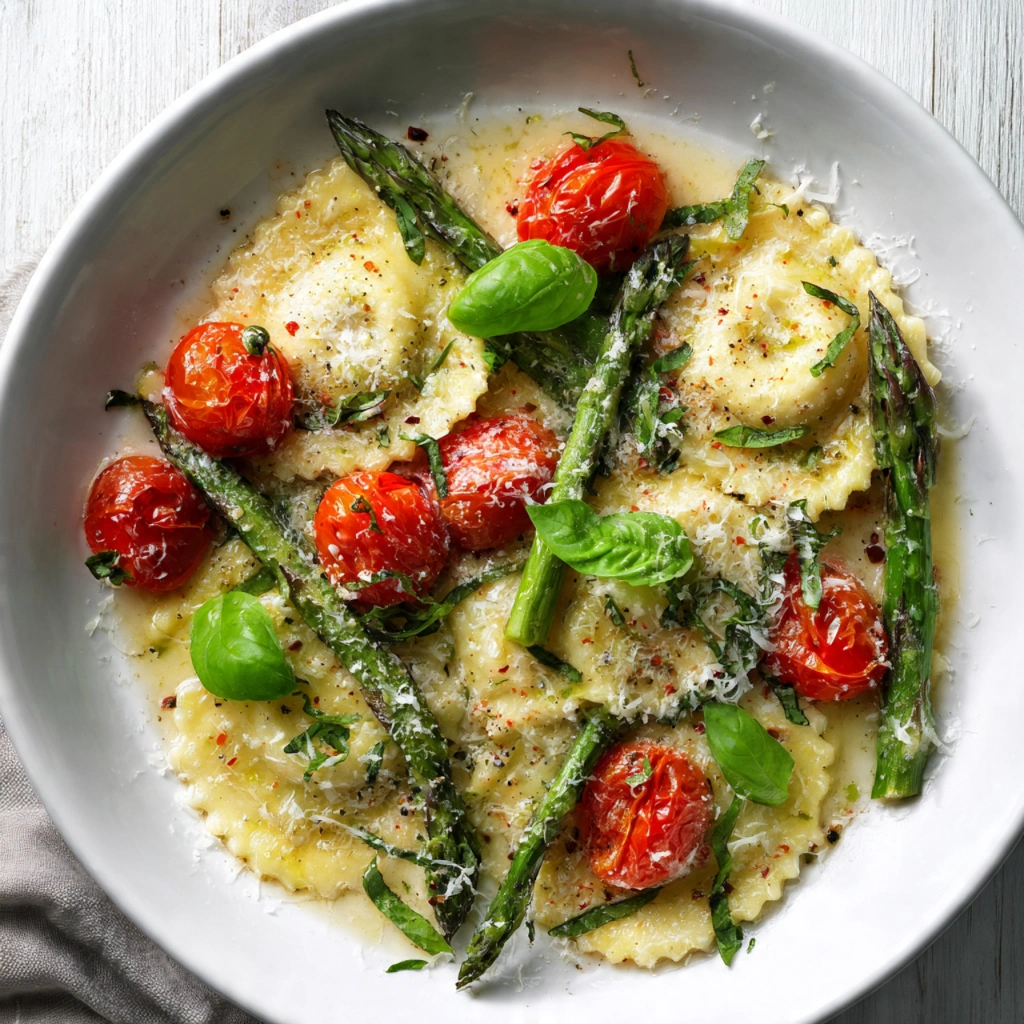
I still remember the first time I made ravioli with asparagus and tomatoes. It wasn’t planned. It was one of those evenings when I opened the fridge and stared at what felt like random leftovers: a half-used package of ravioli, a bunch of asparagus that was just starting to look a little too serious on the edges, and a container of cherry tomatoes I had promised myself I wouldn’t forget. I didn’t have a recipe in mind, only a feeling that I wanted something warm but not heavy, something that still tasted like fresh food rather than a pantry rescue mission.
That night, I learned something important about cooking that I still carry with me. The best meals aren’t always the ones you plan perfectly—they’re often the ones you listen your way into. I sautéed the asparagus, let the tomatoes burst slowly in the pan, and folded everything together with the ravioli. It was simple, but it surprised me. It tasted like spring had shown up early in my kitchen.
Since then, this ravioli with asparagus and tomatoes has become one of those recipes I return to when I want comfort without heaviness, color without effort, and something that feels both fresh and satisfying at the same time.
Why You’ll Love This Recipe
- It comes together quickly with simple, fresh ingredients
- It feels elegant enough for guests but easy enough for a weeknight
- It balances creamy, juicy, and crisp textures in every bite
- It’s flexible and forgiving, even if you swap ingredients
- It works beautifully for both vegetarian meals and light dinners
Ingredients You’ll Need
Ravioli: I usually use cheese ravioli because it keeps things classic and comforting, but spinach or mushroom ravioli works beautifully too. Fresh ravioli cooks quickly and has a soft texture that really carries the sauce, but frozen works just fine when that’s what you have.
Asparagus: Fresh asparagus is key here. I like medium-thick stalks because they stay tender but still have a bit of bite. If the ends look woody, don’t hesitate to trim them generously—this is one of those small steps that makes a big difference.
Cherry tomatoes: These are the heart of the sauce. When they cook down and burst, they create a natural sweetness that ties everything together. I’ve used grape tomatoes in a pinch, and while they’re slightly less juicy, they still do the job.
Garlic: Fresh garlic adds depth without overpowering the dish. I usually go for two cloves, but if I’m honest, I sometimes add an extra one because I love how it perfumes the pan.
Olive oil: A good-quality olive oil matters more than people think here. It becomes the base flavor, so don’t use anything you wouldn’t want to taste on its own.
Butter: Just a small amount helps round everything out and gives the sauce a silky finish.
Parmesan cheese: Freshly grated Parmesan adds saltiness and richness. Pre-grated will work, but freshly grated melts more smoothly into the sauce.
Salt and black pepper: Simple seasoning, but essential. I always taste as I go because both asparagus and tomatoes can vary in sweetness and intensity.
Optional add-ins: A pinch of red pepper flakes for heat, a splash of lemon juice for brightness, or fresh basil at the end if I want to lean into freshness.
How to Make It (Step-by-Step Instructions)
Step 1: Cook the ravioli
Bring a large pot of salted water to a gentle boil. I always say “salted like the sea” because this is your first chance to season the pasta itself. Cook the ravioli according to package instructions, but watch it closely—ravioli can go from perfect to overcooked quickly. When they float, they’re usually close to done. Drain gently and set aside, reserving a small cup of pasta water.
Step 2: Sauté the asparagus
In a large skillet, heat olive oil over medium heat. Add the asparagus and let it cook for a few minutes until it turns bright green and slightly tender but still crisp. This is where patience matters. If you rush this step, the asparagus won’t have that gentle bite that makes the dish so satisfying. I learned this the hard way when I once overcooked it into something soft and forgettable.
Step 3: Build the flavor base
Add the garlic to the skillet and stir quickly so it doesn’t burn. Within seconds, the kitchen will smell incredible. Then add the cherry tomatoes. Let them sit undisturbed for a minute or two so they begin to blister and soften. As they cook, gently press a few with the back of your spoon so they release their juices. This becomes your natural sauce—no heavy cream needed.
Step 4: Combine everything
Add the cooked ravioli directly into the skillet. This is where everything comes together. Toss gently so you don’t tear the pasta. If the mixture feels too dry, add a splash of the reserved pasta water. That little bit of starch helps the sauce cling to the ravioli in a way plain water never could.
Step 5: Finish with richness
Stir in butter and Parmesan cheese. The sauce will turn glossy and slightly creamy without feeling heavy. Taste and adjust seasoning with salt, black pepper, or even a touch of red pepper flakes if you like a little heat.
Expert Tips for the Best Results
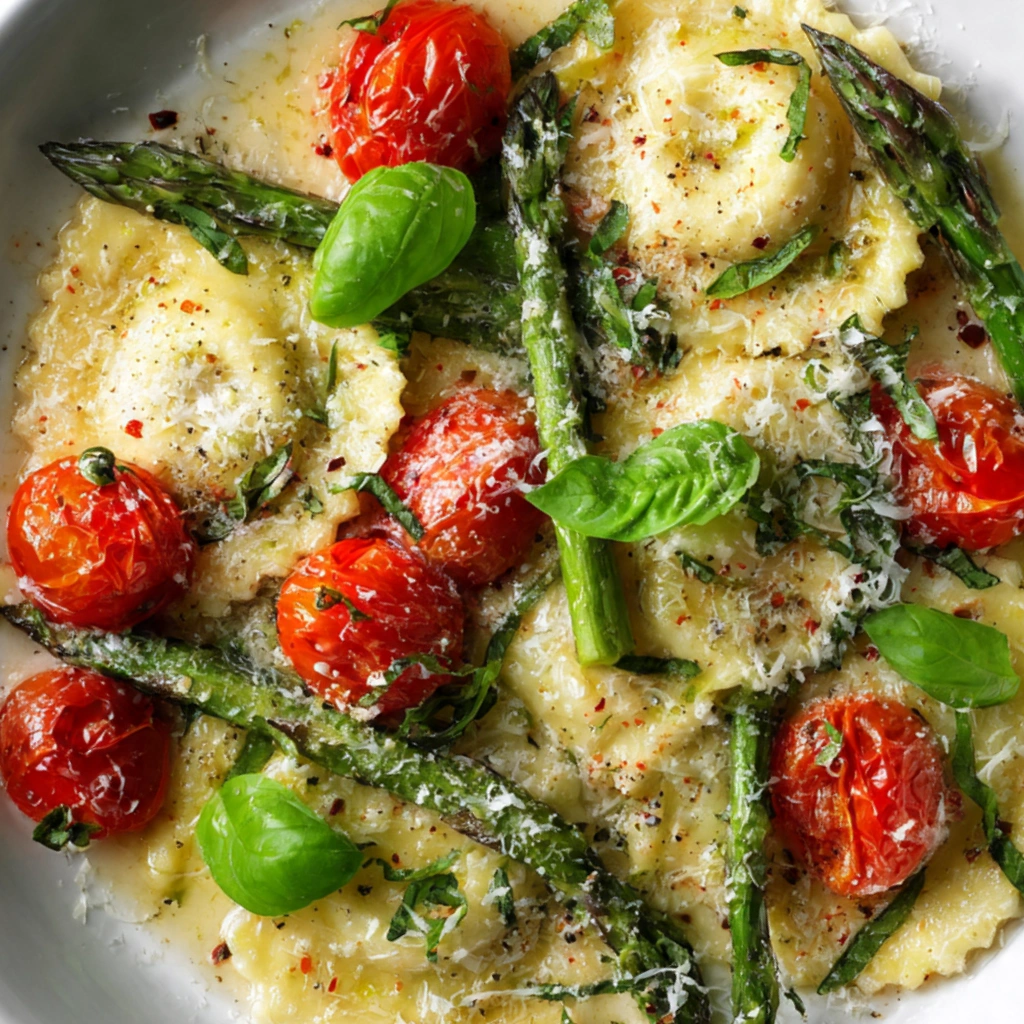
The biggest lesson I’ve learned with this dish is that timing matters more than complexity. You don’t need many ingredients, but you do need to respect how each one behaves in the pan. Don’t overcrowd the skillet, especially when cooking the asparagus, because it needs space to sear slightly rather than steam. Also, resist the urge to over-stir the tomatoes at the beginning—letting them blister first gives you deeper flavor and a more natural sauce. Finally, always finish the dish in the pan rather than plating everything separately. That final toss is where the ravioli absorbs the sauce and becomes something truly cohesive instead of just ingredients on a plate.
Variations & Substitutions
This is one of those recipes that quietly adapts to whatever you have on hand. I’ve made it with spinach instead of asparagus when I needed something softer, and I’ve even added sautéed zucchini when the fridge was looking a little empty. Once, I didn’t have Parmesan and used a little crumbled feta instead, which gave the dish a saltier, tangier personality that I ended up loving. If you want more protein, grilled chicken or shrimp fits in easily without overwhelming the flavors. And if you’re out of cherry tomatoes, a small can of drained diced tomatoes works, though the sauce becomes slightly more rustic and less sweet. Every version I’ve made still felt like the same comforting dish, just with a slightly different story.
Serving Suggestions
I like serving this ravioli with asparagus and tomatoes straight from the skillet while it’s still warm and glossy. It doesn’t need much alongside it, but I often add a simple green salad with lemon vinaigrette or a slice of crusty bread to soak up whatever sauce is left at the bottom of the plate. It works beautifully for a quiet weeknight dinner, but I’ve also served it to friends on casual weekends where conversation matters more than formality. It fits into both worlds effortlessly, which is part of why I keep coming back to it.
Storage & Reheating Instructions
If you have leftovers, store them in an airtight container in the refrigerator for up to three days. The pasta will absorb some of the sauce as it sits, so when reheating, I usually add a small splash of water or olive oil to loosen everything back up. Warm it gently in a skillet rather than the microwave if you can, because it helps bring back some of the original texture. The asparagus softens slightly over time, but the flavor deepens in a way that still feels satisfying.
Recipe FAQs (Answered by Clara)
Can I make this ahead of time?
“You sure can. I often prepare it earlier in the day, keep it covered in the fridge, and reheat it gently before dinner. The flavors actually settle in nicely after resting, even though the pasta is always best fresh.”
What’s the best spiralizer to use?
“I don’t actually spiralize anything in this recipe, but if you’re thinking of adding zucchini noodles or similar, I prefer a simple handheld spiralizer. Nothing fancy—just something that feels easy to grab and use without turning cooking into a project.”
Can I serve it cold?
“I’ve tried it cold once out of curiosity, and while it wasn’t bad, I definitely prefer it warm. The sauce and cheese really come alive when they’re freshly heated.”
How do I make it less watery?
“This usually comes down to the tomatoes. Make sure you let them cook long enough to release and reduce their juices. Also, don’t skip draining the ravioli well. If needed, a quick extra minute in the pan helps everything come together without excess liquid.”
Conclusion
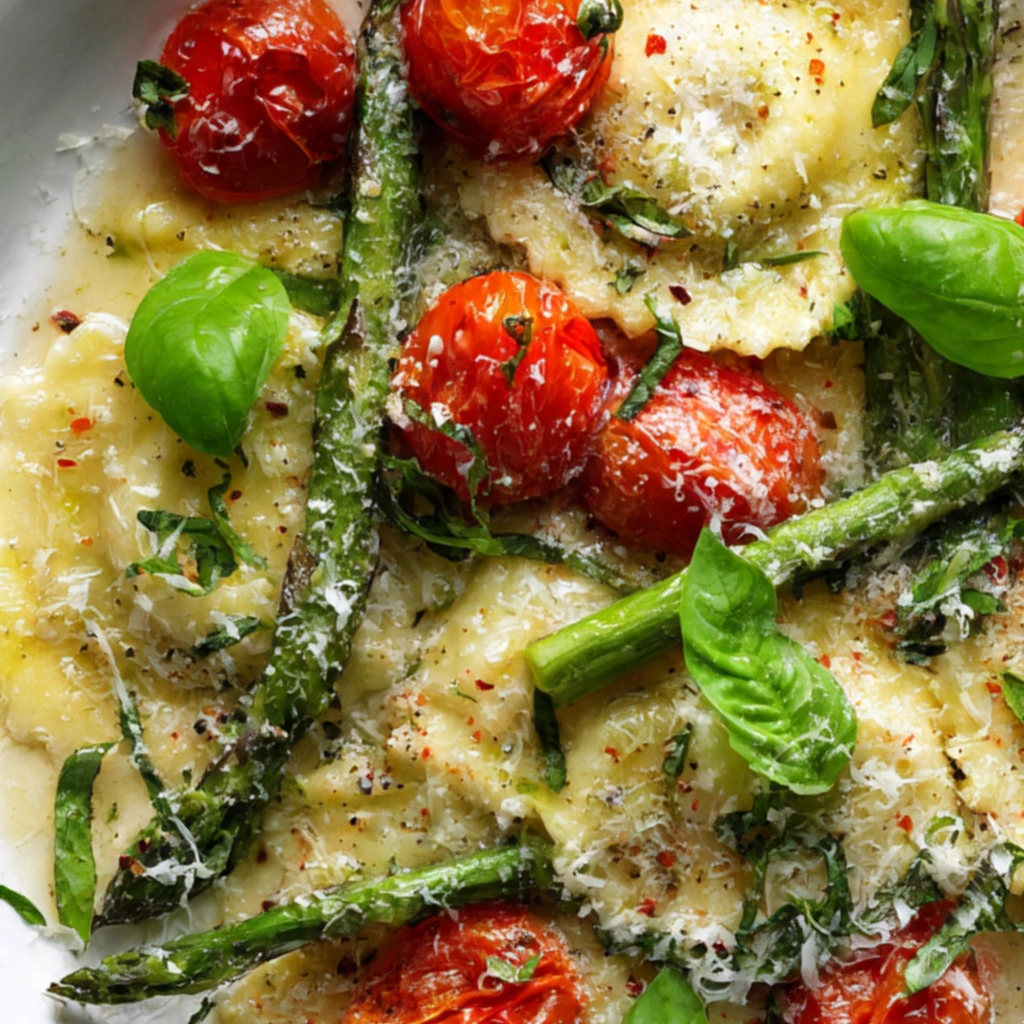
This ravioli with asparagus and tomatoes is one of those recipes that quietly earns a place in your regular rotation. It doesn’t demand perfection or special skills—just a willingness to work with simple ingredients and trust how they come together in the pan. Every time I make it, I’m reminded that some of the best meals aren’t complicated at all. They’re just honest, fresh, and made with a bit of attention.
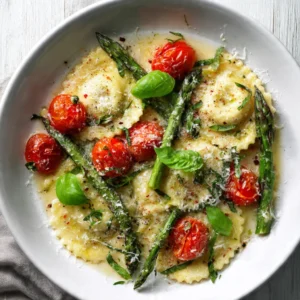
Ravioli with Asparagus and Tomatoes
Ingredients
- 12 oz 340 g ravioli (cheese or spinach-filled)
- 1 bunch asparagus trimmed and cut into 2-inch pieces
- 1 cup cherry tomatoes halved
- 2 tablespoons olive oil
- 2 cloves garlic minced
- ½ teaspoon salt
- ¼ teaspoon black pepper
- ¼ teaspoon red pepper flakes optional
- ¼ cup grated Parmesan cheese
- Fresh basil for garnish optional
Instructions
Cook the ravioli:
- Bring a large pot of salted water to a boil.
- Cook ravioli according to package instructions.
- Drain and set aside.
Cook the vegetables:
- Heat olive oil in a large skillet over medium heat.
- Add asparagus and cook for 4–5 minutes until tender-crisp.
Add tomatoes and garlic:
- Stir in cherry tomatoes and garlic.
- Cook for 2–3 minutes until tomatoes soften slightly.
Combine:
- Add cooked ravioli to the skillet.
- Toss gently with vegetables.
- Season with salt, pepper, and red pepper flakes.
Finish and serve:
- Sprinkle with Parmesan cheese and garnish with fresh basil.
- Serve warm.
Notes
- Extra richness: Add a splash of cream or a pat of butter for a richer sauce.
- Protein option: Add grilled chicken or shrimp.
- Flavor boost: A squeeze of lemon juice brightens the dish.
- Storage: Refrigerate leftovers for up to 3 days.