The first time I made a salmon poke bowl, it wasn’t because I was trying to be trendy or recreate something I had seen online. It was a quiet Tuesday evening, the kind where you open the fridge a dozen times hoping something new will magically appear. I had a piece of fresh salmon I didn’t want to cook into something heavy, a half-used cucumber, and a jar of soy sauce staring back at me like it had ideas of its own.
I remember standing there, chopping and tasting as I went, unsure if I was building something brilliant or completely ruining dinner. But when I finally layered everything into a bowl—the rice still warm, the salmon lightly seasoned, the vegetables crisp and cool—I took that first bite and paused. It was balanced in a way I didn’t expect. Light but satisfying. Simple but layered with flavor.
Since that night, the salmon poke bowl has become one of those meals I return to when I want something that feels clean and grounding but still special enough to slow me down. It’s not fussy. It doesn’t ask for perfection. And that’s exactly why I love it.
Why You’ll Love This Recipe
- It comes together quickly with minimal cooking
- It’s fresh, light, and full of clean, balanced flavors
- It feels restaurant-quality but is surprisingly easy at home
- It’s flexible and forgiving with ingredients
- It works beautifully for lunch, dinner, or meal prep
Ingredients You’ll Need
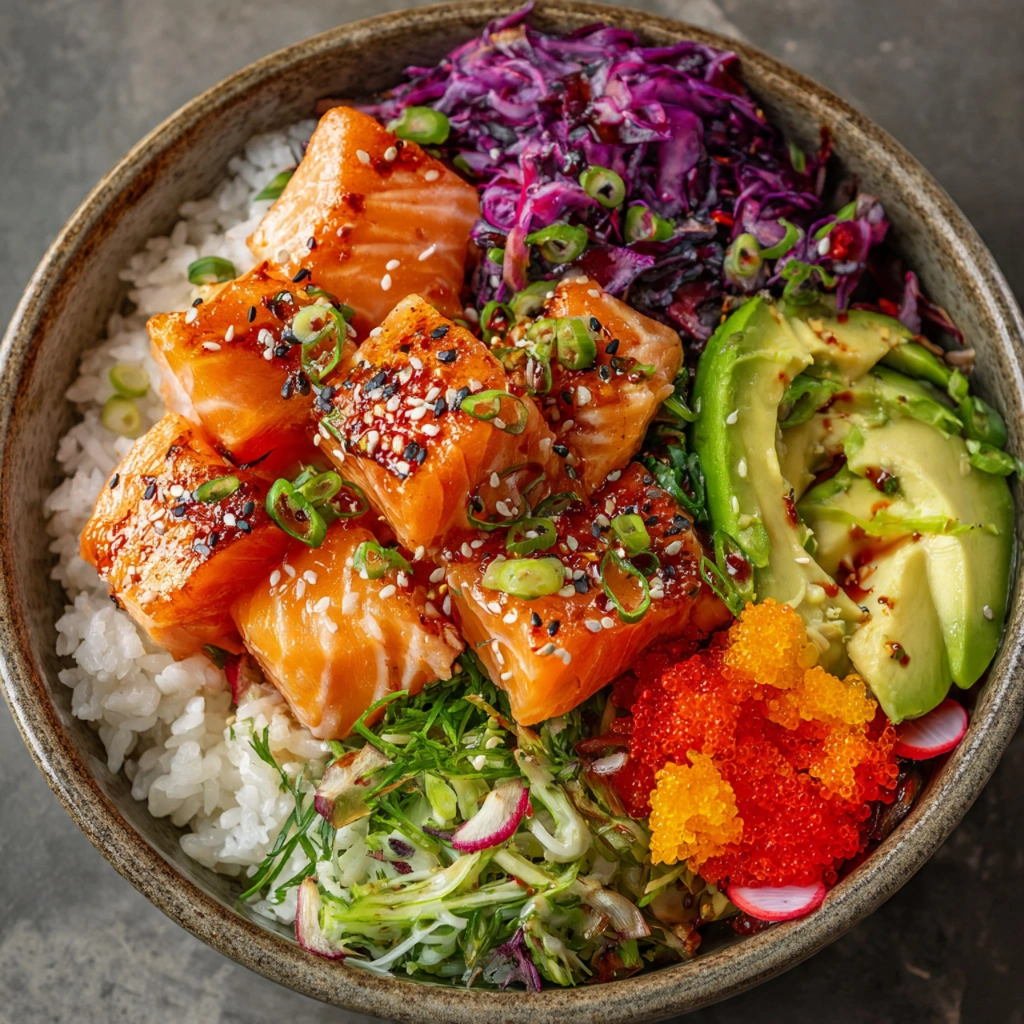
For a salmon poke bowl, I always think in layers: something warm and comforting, something fresh and crunchy, something rich, and something that ties it all together.
Fresh sushi-grade salmon
This is the heart of the bowl. I always insist on sushi-grade because the texture and safety matter here. I cut it into small cubes and try not to overthink it. The fish does most of the work.
Cooked sushi rice or jasmine rice
I’ve used both depending on what I have. Sushi rice gives that slightly sticky, traditional base, while jasmine rice keeps things a bit lighter and more fragrant. I season mine with a splash of rice vinegar, a pinch of sugar, and salt while it’s still warm.
Soy sauce
Simple, salty, and essential. I sometimes use low-sodium soy sauce when I want more control over the flavor.
Sesame oil
Just a small drizzle transforms everything. I learned the hard way that too much can overpower the salmon, so I treat it like perfume—subtle but important.
Avocado
Creamy, soft, and almost buttery. I add it right before serving so it doesn’t brown or get mushy.
Cucumber
For crunch and freshness. I prefer English cucumber because it’s less watery, but regular cucumber works if you scoop out the seeds.
Edamame
These add a little bite and protein. I usually keep a bag in the freezer for moments like this.
Green onions
Sharp, fresh, and necessary for brightness.
Sesame seeds
Toasted if possible. They bring a gentle nutty finish that ties everything together.
Optional additions I’ve used over time: pickled ginger, shredded carrots, seaweed salad, or a drizzle of spicy mayo when I want a little heat.
How to Make It (Step-by-Step Instructions)
Step 1: Prepare the rice
Start with your rice because everything builds from here. I cook it until it’s soft but still holds shape, then season it while warm. I’ve learned not to skip this step because unseasoned rice can make the whole bowl feel flat. Once it’s ready, I let it sit slightly covered so it stays warm but not steaming hot.
Step 2: Prepare the salmon
I take my sushi-grade salmon and cut it into even, bite-sized cubes. In a small bowl, I gently toss it with soy sauce and a tiny drizzle of sesame oil. The key here is restraint. Early on, I used to drown the salmon in sauce thinking more meant better flavor, but it only masks the freshness. Now I let it sit just long enough to absorb flavor without losing its clean texture.
Step 3: Prep the fresh ingredients
While the salmon rests, I slice the cucumber, cube the avocado, and rinse the edamame if it’s been cooked ahead of time. I like keeping everything cold and crisp so the contrast with the rice is noticeable. This is the part where the bowl starts to come alive visually, even before assembling.
Step 4: Assemble the bowl
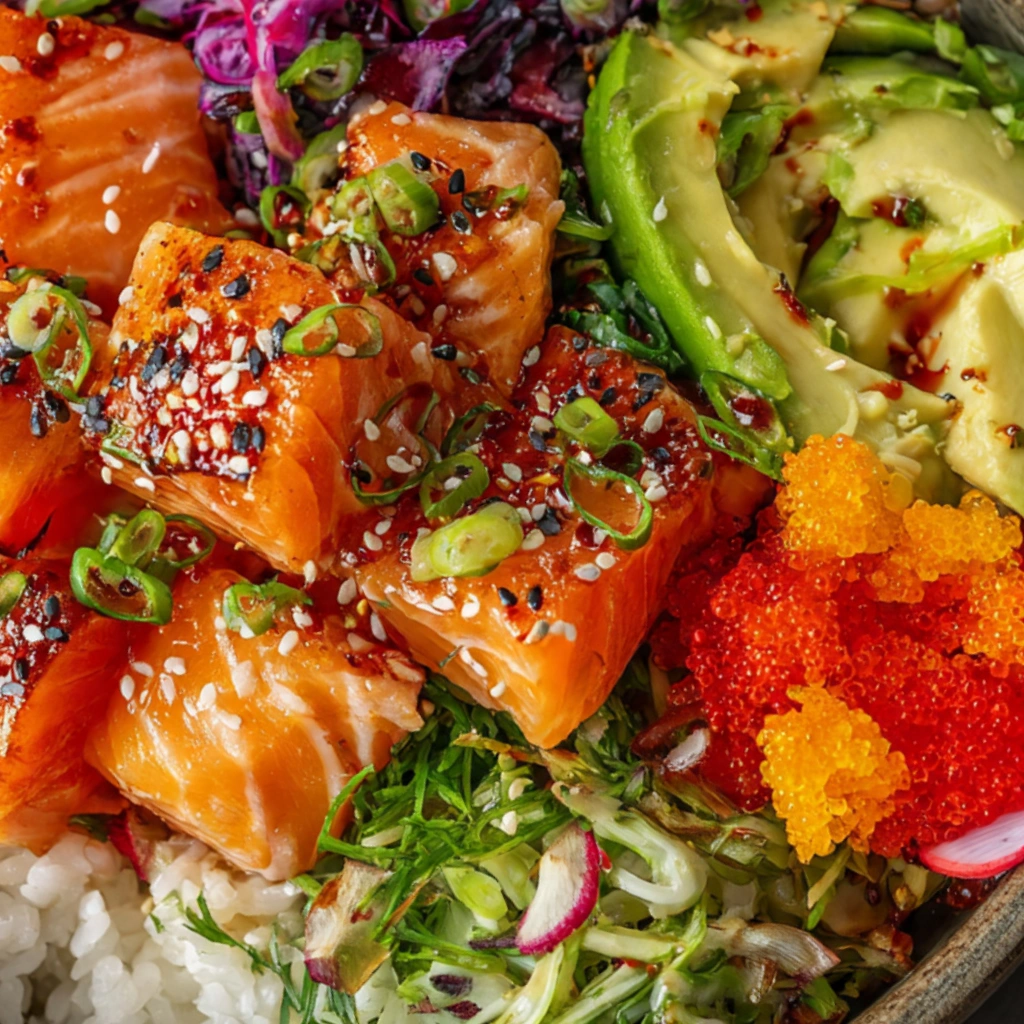
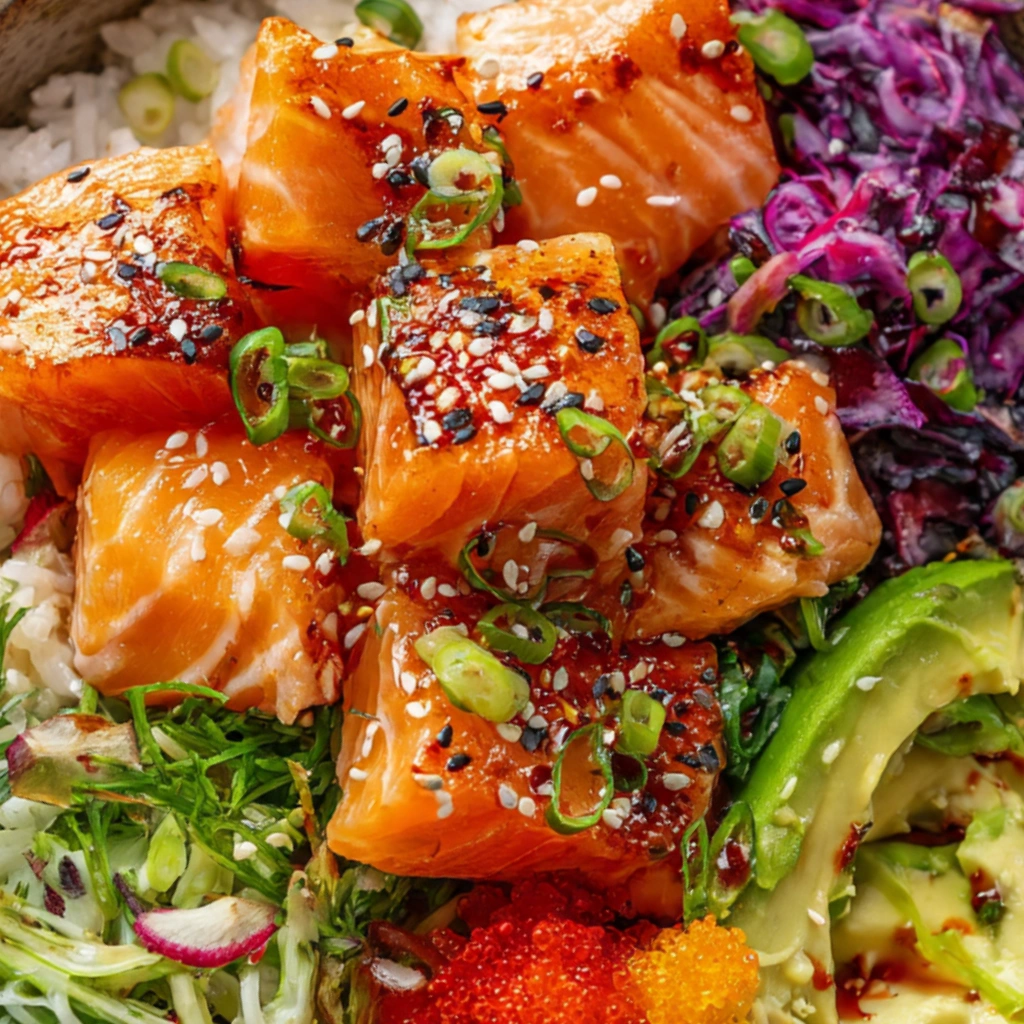
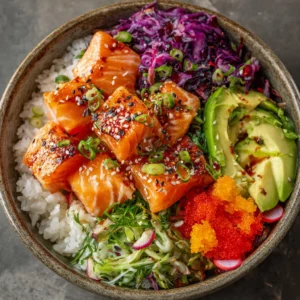
I start with a generous scoop of rice at the base. Then I arrange the salmon, avocado, cucumber, and edamame in sections rather than mixing everything together. I like seeing the colors separately—it makes the bowl feel intentional. I finish with green onions, sesame seeds, and sometimes a little extra soy sauce drizzle right at the end.
Step 5: Serve immediately
This is not a dish that likes to wait too long. I always serve it right away while the rice is slightly warm and the toppings are still fresh and cold. That contrast is where the magic happens.
Expert Tips for the Best Results
Over the years, I’ve realized that the difference between a good poke bowl and a truly memorable one comes down to balance and restraint. Don’t over-marinate the salmon or it loses its delicate texture. Always taste your rice seasoning before assembling because under-seasoned rice can dull everything else. And perhaps most importantly, keep your knife cuts clean and consistent—it’s not about perfection, but about letting each ingredient hold its own space. I also recommend prepping everything before you start assembling because once you begin building the bowl, it comes together quickly and you don’t want to pause halfway through.
Variations & Substitutions
I’ve made this poke bowl in so many different ways depending on what’s in my kitchen. There was a time I didn’t have avocado and replaced it with mango, which turned out to be unexpectedly refreshing and slightly sweet in the best way. Another time I swapped salmon for tuna when that’s all I could find, and it still delivered that same satisfying richness. Brown rice works if you want something more hearty, and cauliflower rice is a good lighter alternative when I’m trying to keep things extra fresh. I’ve even added spicy mayo when I wanted a little kick, and once, out of pure curiosity, I tried it with leftover grilled salmon instead of raw—it wasn’t traditional, but it was still deeply satisfying.
Serving Suggestions
I usually serve this salmon poke bowl on its own because it already feels complete, but on days when I want a little extra, I’ll add a simple miso soup or a light seaweed salad on the side. It’s the kind of meal that fits beautifully into both a quiet solo dinner and a casual gathering with friends. I also love serving it in wide shallow bowls because it gives everything room to breathe and makes the presentation feel intentional without any extra effort.
Storage & Reheating Instructions
This is one of those dishes that is best enjoyed fresh, especially because of the raw salmon. If I do have leftovers, I store each component separately in airtight containers. The rice keeps well in the fridge for a couple of days and can be gently warmed, but the salmon should ideally be consumed the same day. I’ve noticed that once everything is mixed together and refrigerated, the texture of the vegetables softens and the bowl loses that crisp contrast that makes it so special. So I always recommend assembling only what you plan to eat.
Recipe FAQs (Answered by Clara)
Can I make this ahead of time?
“You sure can. I often prepare the rice and chop the vegetables in the morning, then store everything separately. I only assemble it right before eating so everything stays fresh and vibrant.”
What’s the best knife or tool to use?
“I always use a sharp chef’s knife for the salmon. A dull knife can tear the fish instead of giving you those clean, beautiful cubes that make the bowl feel refined.”
Can I serve it cold?
“I do all the time. In fact, I prefer it slightly chilled, especially in warmer months. Just make sure your rice isn’t too cold or it can feel a bit stiff.”
How do I make it less watery?
“I’ve learned that the key is drying your cucumber well and not over-saucing the salmon. Too much liquid in the bowl tends to pool at the bottom, so keeping ingredients well-prepped makes all the difference.”
Conclusion
This salmon poke bowl is one of those recipes that reminds me why I love cooking in the first place. It’s simple, yes, but it’s also thoughtful. Every ingredient has a purpose, and nothing is rushed. I hope when you make it, you give yourself the same space to slow down and enjoy the process. Don’t worry about making it perfect—just make it yours.
If you try this recipe, I’d love to hear how it turned out for you. There’s something special about seeing how others bring their own small touches into a bowl like this. And if it becomes a repeat meal in your kitchen the way it did in mine, then I think it’s done exactly what it was meant to do.
Nutrition Information (Optional)
Approximate per serving:
Calories: 450–550
Protein: 28–32g
Carbohydrates: 45–55g
Fat: 18–25g
Sodium: varies depending on soy sauce used
Salmon Poke Bowl
Ingredients
For the Base:
- 2 cups cooked sushi rice or jasmine rice
- 1 teaspoon rice vinegar optional
For the Salmon:
- 8 oz sushi-grade salmon diced
- 2 tablespoons soy sauce
- 1 teaspoon sesame oil
- 1 teaspoon rice vinegar
- 1 teaspoon honey or maple syrup
Toppings:
- 1 avocado sliced
- ½ cup cucumber diced
- ½ cup shredded carrots
- ¼ cup edamame
- 2 tablespoons green onions sliced
- Sesame seeds for garnish
- Optional: seaweed salad radishes, spicy mayo
Instructions
- Cook rice according to package instructions and let cool slightly.
- In a bowl, mix soy sauce, sesame oil, rice vinegar, and honey.
- Add diced salmon and gently toss to coat.
- Divide rice between bowls.
- Arrange salmon and toppings over the rice.
- Sprinkle with green onions and sesame seeds.
- Drizzle with extra sauce or spicy mayo if desired.
- Serve immediately.
Notes
- Fish quality: Use sushi-grade salmon for safety and best flavor.
- Rice option: Substitute with brown rice or cauliflower rice.
- Protein swaps: Tuna, shrimp, tofu, or cooked chicken.
- Flavor boost: Add sriracha or wasabi for heat.
- Storage: Best eaten fresh; store components separately if prepping ahead.