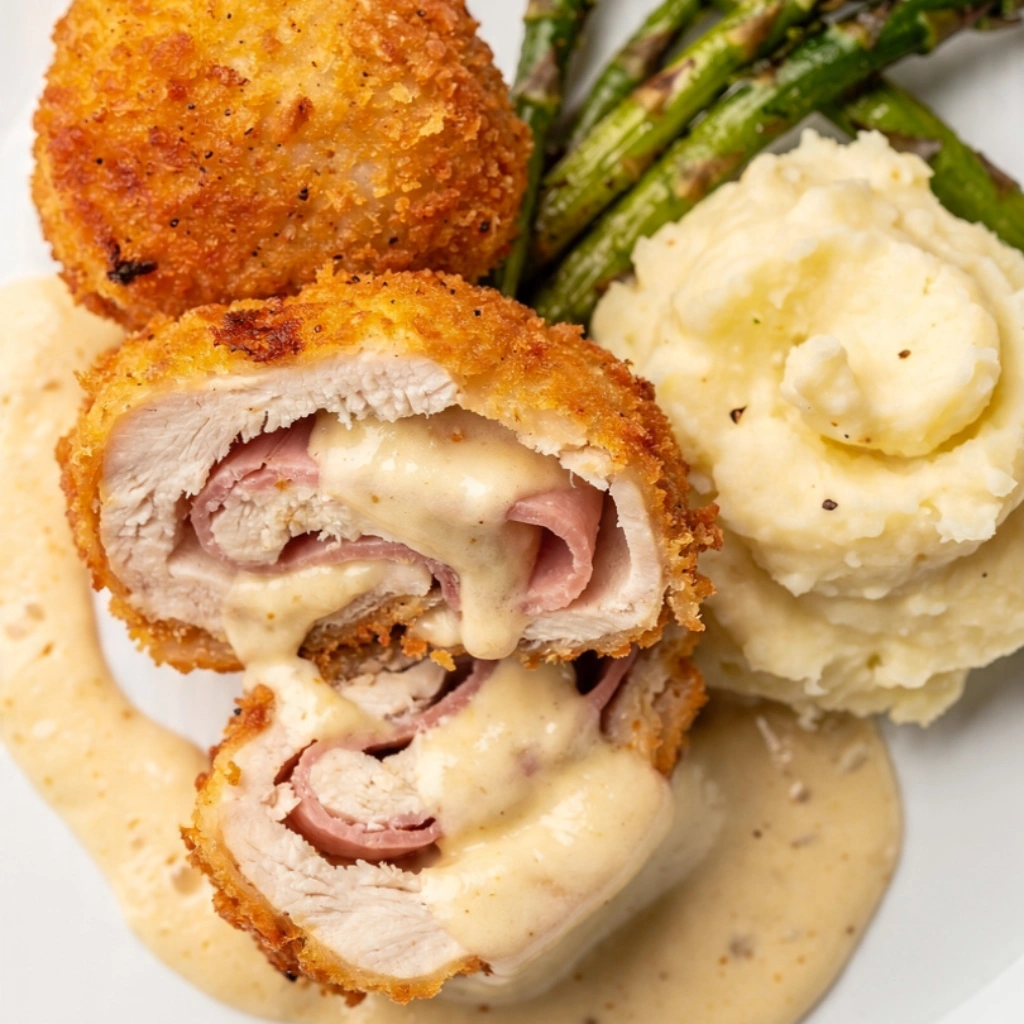
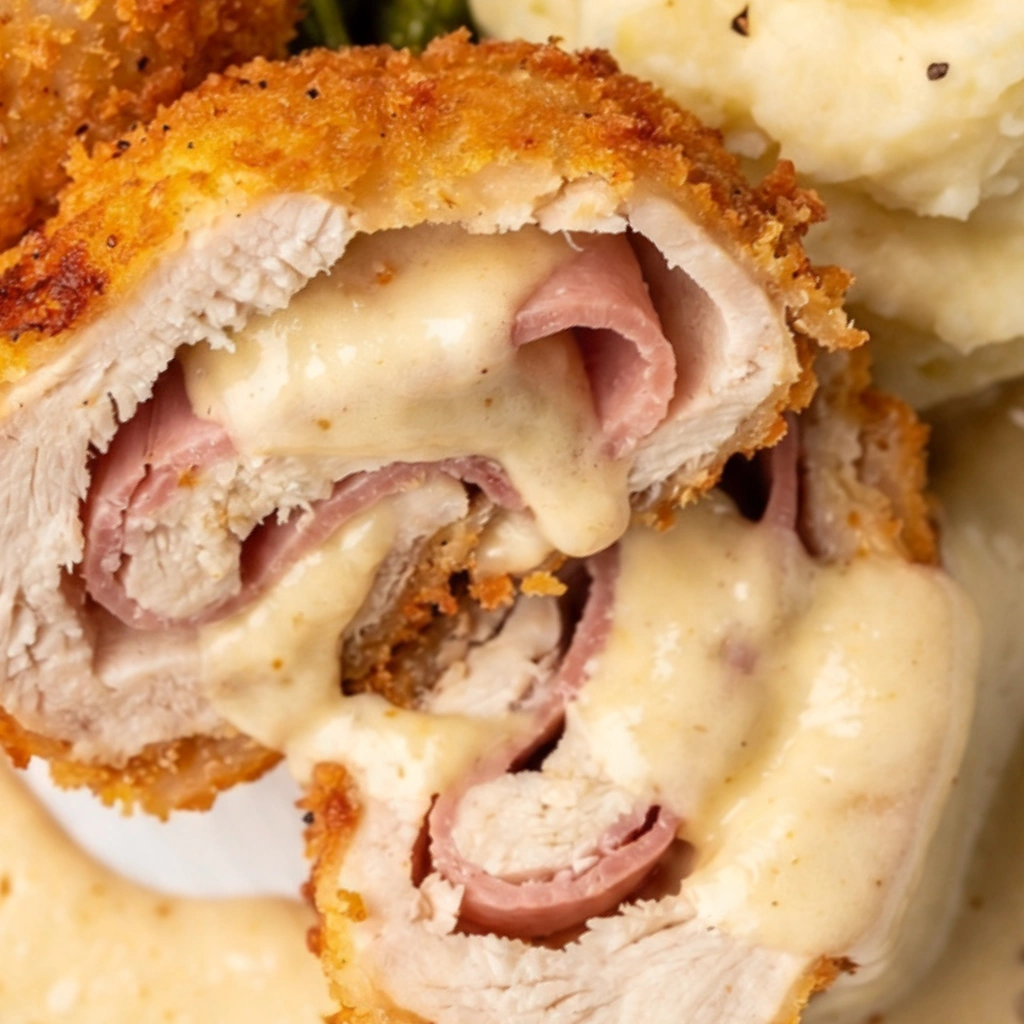
Chicken Cordon Bleu has always felt like one of those recipes that looks like it belongs in a restaurant kitchen—golden, crisp, a little dramatic when you slice into it and the melted cheese slowly spills out. The first time I tried making it at home, I was convinced I had bitten off more than I could chew. I still remember standing in my kitchen, chicken fillets unevenly pounded on the counter, sliding everywhere, and cheese refusing to stay where I wanted it. It was one of those evenings where you either laugh or give up. I laughed. A lot.
But that night taught me something important: this dish isn’t about perfection. It’s about patience and small adjustments. Over time, I learned how to make it reliable, weeknight-friendly, and still impressive enough for guests. Now, it’s one of those recipes I come back to when I want comfort food that still feels special.
Why You’ll Love This Recipe
- It delivers restaurant-style flavor without complicated techniques
- The crispy coating and melted cheese combination is deeply satisfying
- It works well for both weeknight dinners and special occasions
- You can prep parts of it ahead of time for easier cooking
- Leftovers reheat surprisingly well when done right
Ingredients You’ll Need
For something that looks so fancy, the ingredient list is refreshingly simple. That’s part of why I love it.
- Chicken breasts: I always choose medium-sized ones and slice them carefully to create a pocket. If they’re too thick, they won’t cook evenly, and I learned that the hard way early on.
- Swiss cheese: The classic choice. It melts smoothly and gives that slightly nutty flavor. If I’m out of Swiss, I’ve used provolone in a pinch, and it still turns out comforting.
- Flour: Just for dredging and helping the coating stick.
- Eggs: Beaten well so they coat the chicken evenly.
- Breadcrumbs: I prefer panko for extra crunch, though regular breadcrumbs are perfectly fine.
- Dijon mustard: This adds a subtle sharpness that balances the richness inside.
- Salt and black pepper: Simple seasoning, but don’t underestimate it.
- Paprika and garlic powder: Optional, but I like adding them to the breadcrumb mixture for deeper flavor.
- Butter or oil: For baking or pan-frying depending on your method.
What I’ve learned over time is that quality matters less than balance here. Even with basic ingredients, the final dish feels indulgent if everything is layered properly.
How to Make It (Step-by-Step Instructions)
Step 1: Prepare the chicken
I start by placing the chicken breasts between two sheets of parchment paper and gently pounding them until they’re even in thickness. This step is not glamorous, but it’s essential. Uneven chicken means uneven cooking, and nothing is more disappointing than cutting into a beautiful crust only to find undercooked meat inside.
Once flattened, I season both sides with salt and pepper. I used to skip seasoning at this stage and rely only on the coating, but I quickly realized flavor needs to be built in layers.
Step 2: Add the filling
I spread a thin layer of Dijon mustard on the inside of each chicken piece. Then I lay down a slice of followed by Swiss cheese. The trick I learned after a few messy attempts is not overstuffing. More filling sounds better in theory, but it only makes rolling harder and increases the chance of leakage.
Once filled, I roll the chicken tightly and secure it with toothpicks. I used to be careless here, and I paid for it with cheese escaping into the pan. Tight rolling is everything.
Step 3: Coat the chicken
I set up a simple breading station: flour in one bowl, beaten eggs in another, and seasoned breadcrumbs in a third. Each rolled chicken piece goes first into flour, then egg, then breadcrumbs.
This part can get a little messy, but I’ve learned to accept it as part of the process. The more evenly you coat it, the better the crust will hold during cooking.
Step 4: Cook until golden
You can bake or pan-fry this dish, and I’ve done both depending on my mood and time.
For baking, I place the chicken on a lined tray, brush lightly with melted butter or oil, and bake until golden and cooked through. For pan-frying, I sear the rolls until crispy on all sides, then finish them in the oven.
Either way, the goal is the same: a deep golden crust and fully melted cheese inside.
Step 5: Rest and slice
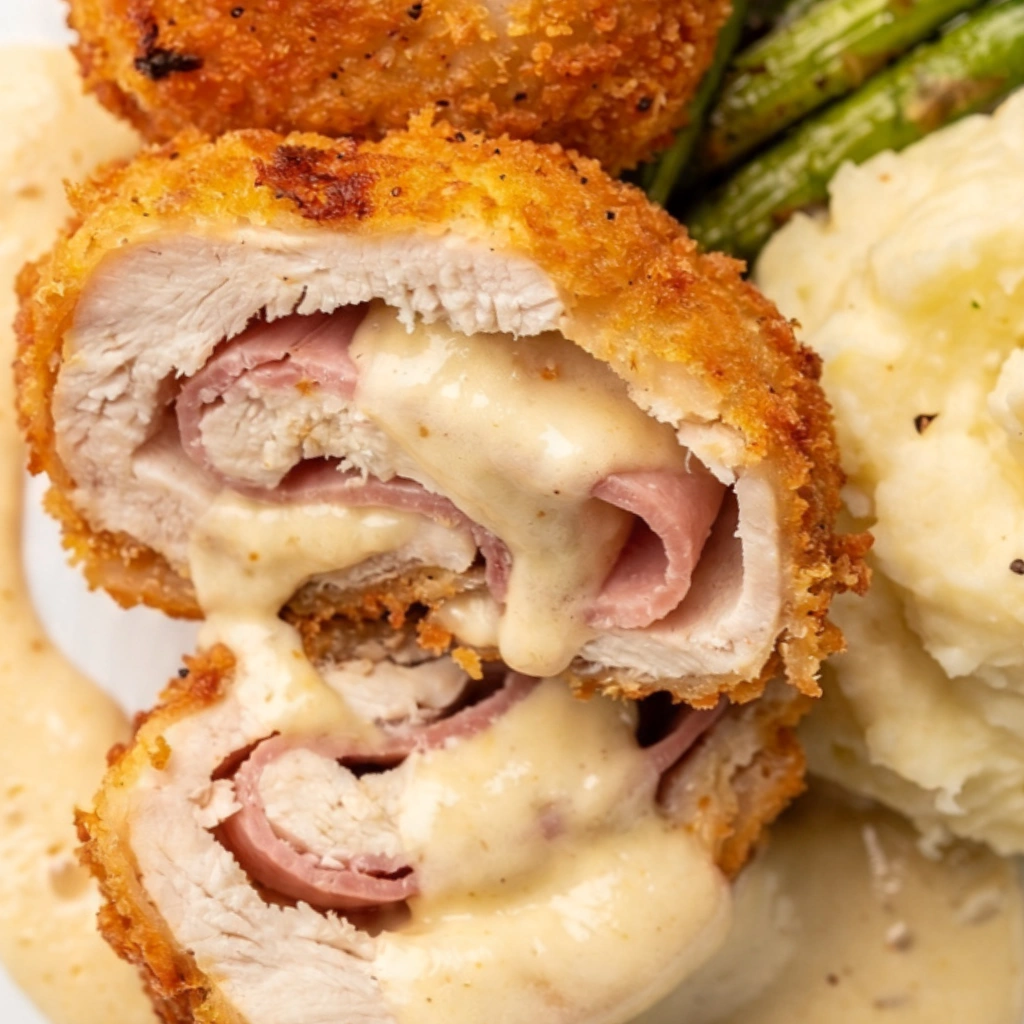
This is where patience pays off. I let the chicken rest for a few minutes before slicing. The first time I rushed this step, all the cheese ran out immediately. Resting helps everything settle and keeps the filling intact.
When you finally cut into it, that slow melt of cheese is the moment you’ve been working toward.
Expert Tips for the Best Results
The biggest lesson I’ve learned with Chicken Cordon Bleu is that small details make the difference between “good” and “memorable.” Take your time pounding the chicken evenly—it really does matter more than it seems. Don’t overfill, even if you’re tempted. A tight roll will always outperform a stuffed, messy one. And most importantly, let the chicken rest after cooking. I know it’s hard to wait when it smells so good, but that pause keeps everything together and makes slicing clean and satisfying.
Variations & Substitutions
Over the years, I’ve played around with this recipe more than I expected. Once, I swapped Swiss cheese for mozzarella when that’s all I had, and it turned out extra gooey and comforting in a very different way. Another time, I used turkey instead of chicken just to see if it would work for a lighter meal, and it absolutely did. I’ve even added a thin layer of spinach inside when I wanted to sneak in something green. There’s something forgiving about this dish—it adapts as long as you respect the basic structure of protein, filling, and crisp coating.
Serving Suggestions
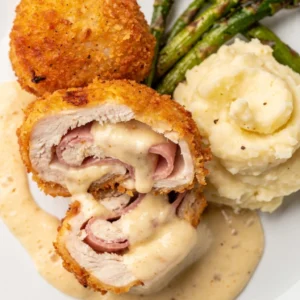
I usually serve Chicken Cordon Bleu with something simple on the side because the dish itself is already rich and satisfying. Mashed potatoes, roasted vegetables, or even a light green salad work beautifully. On colder evenings, I like pairing it with a creamy sauce or a warm soup starter. It also feels right for small gatherings or Sunday dinners where you want something comforting but still a little special. It’s the kind of meal that makes people pause after the first bite.
Storage & Reheating Instructions
Leftovers store well in the fridge for a couple of days if kept in an airtight container. When I reheat it, I always prefer the oven over the microwave because it helps bring back some of the crispiness. The microwave tends to soften the coating too much, which changes the texture more than I like. If I’m honest, the flavor holds up beautifully, but the crust is always at its best fresh from the oven.
Recipe FAQs (Answered by Clara)
Can I make this ahead of time?
You sure can. I often prepare it in the morning, cover it tightly, and let it rest in the fridge until I’m ready to cook. It actually holds together better after chilling, which makes cooking easier later.
What’s the best way to ensure it doesn’t fall apart?
Rolling tightly and securing with toothpicks is key. I also make sure the seam side is placed down first when cooking so it sets properly.
Can I serve it cold?
I personally prefer it warm because the cheese texture is part of the experience. Cold, it’s still edible, but it loses that comforting melt.
How do I make it less watery?
Patting the chicken dry before assembling helps a lot. Also, avoiding overly watery cheeses and not overcooking prevents excess moisture buildup.
Conclusion
Chicken Cordon Bleu is one of those recipes that rewards patience more than perfection. Every time I make it, I’m reminded that even a slightly messy roll or uneven crust can still lead to something deeply satisfying on the plate. I hope you try it in your own kitchen, make it your own, and don’t worry if the first attempt isn’t flawless. Mine certainly wasn’t. Cooking, in the end, is just practice wrapped in flavor.
If you do make it, I’d love to hear how it turned out for you—what you changed, what surprised you, and what you’d do differently next time. That’s where the real joy of home cooking lives.
Nutrition Information (Optional)
Per serving (approximate):
Calories: 420–520
Protein: 38g
Carbohydrates: 18–25g
Fat: 22–30g
Sodium: varies depending cheese used
Chicken Cordon Bleu
Ingredients
- 4 boneless skinless chicken breasts
- 4 slices ham
- 4 slices Swiss cheese
- 1 cup breadcrumbs
- ½ cup all-purpose flour
- 2 eggs beaten
- 1 teaspoon garlic powder
- ½ teaspoon salt
- ¼ teaspoon black pepper
- 2 tablespoons butter for baking or frying
Instructions
Preheat oven to 375°F (190°C). Lightly grease a baking dish.
Prepare the chicken:
- Place chicken breasts between plastic wrap and pound to even thickness.
Fill and roll:
- Place a slice of ham and cheese on each chicken breast.
- Roll tightly and secure with toothpicks.
Bread the chicken:
- Set up three bowls: flour, beaten eggs, and breadcrumbs mixed with garlic powder, salt, and pepper.
- Coat each chicken roll in flour, dip in eggs, then coat with breadcrumbs.
Cook:
- Place in baking dish and dot with butter.
- Bake for 25–30 minutes, or until golden and cooked through (internal temp 165°F / 74°C).
Serve:
- Let rest for 5 minutes, remove toothpicks, and serve warm.
Notes
- Extra crispy: Pan-sear before baking for a golden crust.
- Sauce idea: Serve with a creamy Dijon or cheese sauce.
- Make ahead: Assemble ahead and refrigerate until ready to bake.
- Storage: Refrigerate leftovers for up to 3 days.