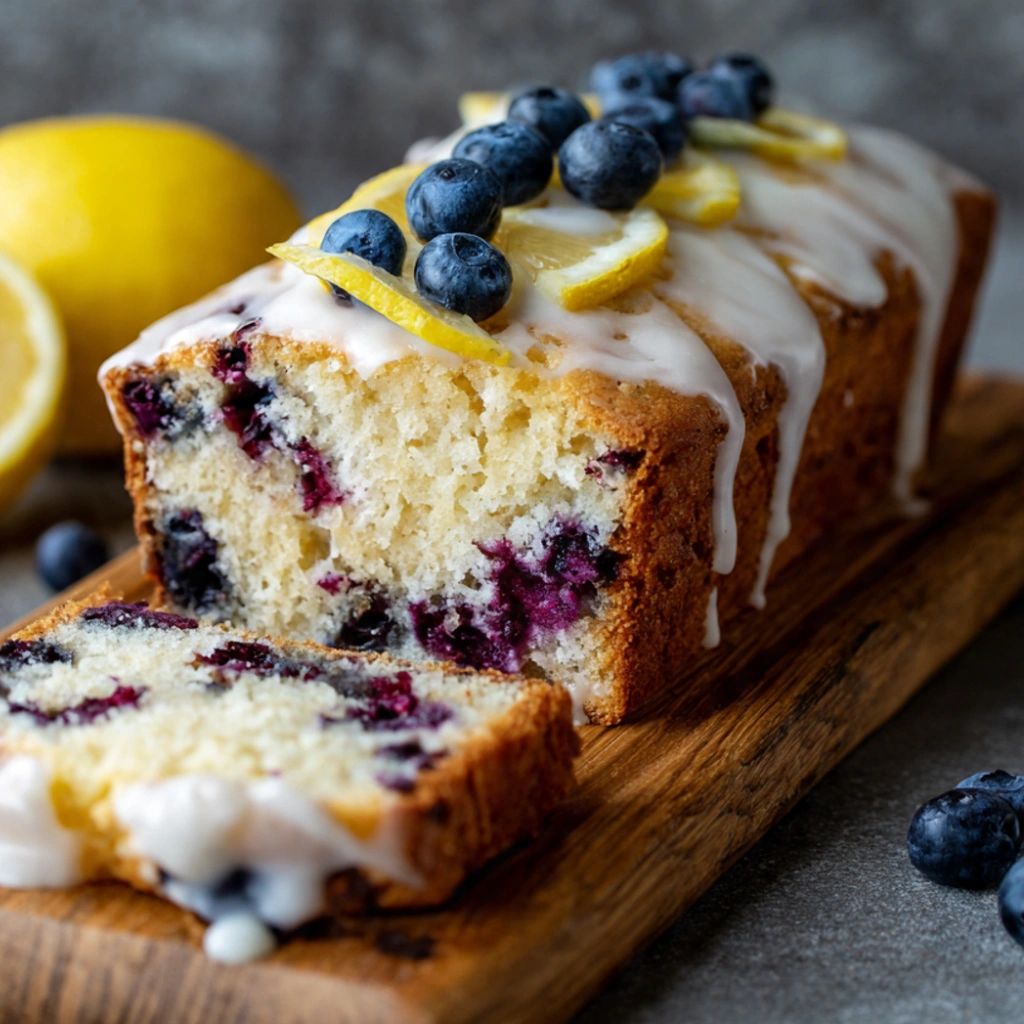
There’s something about the combination of lemon and blueberries that takes me straight back to a quiet Sunday morning in early spring. I remember standing in my kitchen, windows cracked open just enough to let in that fresh, slightly cool air, while a loaf cake baked slowly in the oven. It was one of those days where nothing urgent was waiting for me, and I finally had time to bake just for the joy of it—not for guests, not for a celebration, just because I wanted something comforting with my tea.
That first lemon blueberry loaf I made wasn’t perfect. The berries sank, the top cracked a little more than I expected, and I probably rushed the cooling step. But when I sliced into it and tasted that bright lemon flavor paired with soft, juicy blueberries, I knew I had something worth refining. Over the years, I’ve made this loaf more times than I can count—adjusting the balance of tartness, learning how to keep the berries from sinking, and finding that just-right texture that’s moist but not heavy.
Now, it’s one of those recipes I turn to when I need something reliable and quietly impressive. It’s simple, yes—but when done right, it feels like a small luxury.
Why You’ll Love This Recipe
- Bright, fresh lemon flavor balanced with sweet blueberries
- Moist, tender crumb that stays soft for days
- Simple ingredients you likely already have at home
- Perfect for breakfast, brunch, or an afternoon treat
- Easy to make ahead and even better the next day
Ingredients You’ll Need
- 1 ½ cups all-purpose flour
I’ve tried swapping part of this with whole wheat flour before, and while it works, it does make the loaf slightly denser. I stick to all-purpose when I want that soft, bakery-style crumb. - 1 teaspoon baking powder
This gives the loaf its gentle lift. Make sure it’s fresh—old baking powder can leave you with a flat, heavy loaf. - ½ teaspoon baking soda
- ¼ teaspoon salt
Just enough to balance the sweetness and bring out the lemon. - ½ cup unsalted butter, softened
I always let it sit out until it’s truly soft. If it’s too cold, it won’t cream properly. - ¾ cup granulated sugar
- 2 large eggs, room temperature
I used to skip this step, but room temp eggs really do make a smoother batter. - 2 tablespoons fresh lemon juice
Fresh is key here—bottled just doesn’t have the same brightness. - 1 tablespoon lemon zest
This is where most of the lemon flavor comes from, so don’t skip it. - ½ cup milk
Whole milk gives the best richness, but I’ve used 2% in a pinch. - 1 teaspoon vanilla extract
- 1 cup fresh or frozen blueberries
If using frozen, don’t thaw them. Toss them straight into the batter to prevent bleeding. - 1 tablespoon flour (for tossing blueberries)
This little trick helps keep them from sinking.
Optional glaze:
- 1 cup powdered sugar
- 1–2 tablespoons lemon juice
How to Make It (Step-by-Step Instructions)
Step 1: Prepare Your Pan and Oven
Preheat your oven to 350°F (175°C) and line a loaf pan with parchment paper. I like leaving a bit of overhang so I can lift the loaf out easily later—it saves you from that nerve-wracking moment of wondering if it’ll stick.
Step 2: Mix the Dry Ingredients
In a medium bowl, whisk together the flour, baking powder, baking soda, and salt. I used to skip whisking and just stir, but whisking really helps distribute everything evenly, which makes a difference in how the loaf rises.
Step 3: Cream the Butter and Sugar
In a larger bowl, beat the butter and sugar together until light and fluffy. This step is where you build the texture of the cake. Don’t rush it—give it a good 2–3 minutes. It should look pale and slightly airy.
Step 4: Add Eggs and Flavorings
Add the eggs one at a time, mixing well after each addition. Then stir in the lemon juice, lemon zest, and vanilla extract. The batter might look slightly curdled at this stage—that’s completely normal.
Step 5: Combine Wet and Dry Ingredients
Add the dry ingredients in batches, alternating with the milk. Start and end with the dry mixture. Mix just until combined—I’ve learned the hard way that overmixing leads to a tough loaf.
Step 6: Fold in the Blueberries
Toss the blueberries with a tablespoon of flour, then gently fold them into the batter. Use a light hand here—you want to keep the berries intact.
Step 7: Bake
Pour the batter into your prepared loaf pan and smooth the top. Bake for 50–60 minutes, or until a toothpick inserted into the center comes out clean.
If the top starts browning too quickly, loosely cover it with foil. I’ve had a few loaves get a little too golden before the inside was done, and this simple step fixes that.
Step 8: Cool
Let the loaf cool in the pan for about 10–15 minutes, then transfer it to a wire rack. I know it’s tempting to slice into it right away—I’ve done it—but letting it cool fully really improves the texture.
Step 9: Add the Glaze (Optional)
If you’re using the glaze, mix powdered sugar with lemon juice until smooth, then drizzle over the cooled loaf. It adds an extra layer of brightness that I personally love.

Expert Tips for the Best Results
Over time, I’ve learned that the small details make all the difference with this loaf—softened butter that’s truly at room temperature, gently folding the batter instead of aggressively mixing, and taking the extra minute to coat the blueberries in flour all help create a loaf that feels balanced and well-made rather than rushed; I also always trust my eyes more than the clock when baking, because ovens vary so much, and pulling the loaf out at just the right moment—when the top is golden and the center is set but still tender—makes the difference between a dry cake and one that stays soft for days.
Variations & Substitutions
There have been plenty of times I’ve had to improvise with this recipe, and honestly, some of those moments turned into happy accidents—like the time I swapped half the butter for Greek yogurt and ended up with an even softer crumb, or when I added a handful of raspberries alongside the blueberries for a slightly more tart flavor; you can also use orange zest instead of lemon for a warmer citrus note, or even make it dairy-free with plant-based milk and butter, and while each version tastes a little different, the heart of the recipe always holds up beautifully.
Serving Suggestions
I usually serve this lemon blueberry loaf slightly warm or at room temperature, often with a cup of tea or coffee in the afternoon when things finally slow down, but it’s just as lovely as part of a relaxed weekend brunch spread with fresh fruit on the side; sometimes I’ll slice it thick and add a light smear of butter, especially if it’s a day old, because it melts right into the crumb and makes it feel even more indulgent without much effort.
Storage & Reheating Instructions
In my kitchen, this loaf rarely lasts more than a couple of days, but when it does, I wrap it tightly and keep it at room temperature for up to three days, or in the fridge if the weather is warm; if it starts to feel a little firm, a quick 10–15 seconds in the microwave brings back that soft texture, though I’ve found it’s best enjoyed at room temperature where the lemon flavor really shines and the crumb stays tender without drying out.
Recipe FAQs (Answered by Clara)
Can I make this ahead of time?
You sure can. I often bake it the night before, let it cool completely, and wrap it tightly. By the next day, the flavors have settled and it actually tastes even better.
What’s the best spiralizer to use?
This recipe doesn’t require a spiralizer, but when it comes to tools in general, I always say keep it simple—good mixing bowls, a reliable whisk, and a sturdy loaf pan matter far more here.
Can I serve it cold?
You can, but I personally prefer it at room temperature. Cold tends to mute the lemon flavor a bit, while room temperature lets everything come through more clearly.
How do I make it less watery?
If your loaf turns out a bit too moist, it’s usually from excess liquid in the blueberries. Make sure not to thaw frozen berries and always toss them in flour before adding them to the batter—it really helps control that extra moisture.

Conclusion
This lemon blueberry loaf cake has become one of those quiet staples in my kitchen—the kind of recipe I return to without thinking twice because I know it will turn out well and bring a little comfort with it. It’s not flashy or complicated, but it has a way of making ordinary moments feel a bit more special.

Lemon Blueberry Loaf Cake
Ingredients
For the Cake:
- 1½ cups 190 g all-purpose flour
- 1 teaspoon baking powder
- ½ teaspoon baking soda
- ¼ teaspoon salt
- ½ cup 115 g unsalted butter, softened
- ¾ cup 150 g granulated sugar
- 2 large eggs
- ½ cup 120 ml milk or buttermilk
- 2 tablespoons fresh lemon juice
- 1 tablespoon lemon zest
- 1 teaspoon vanilla extract
- 1 cup fresh or frozen blueberries
- 1 tablespoon flour for coating blueberries
For the Lemon Glaze (Optional):
- 1 cup powdered sugar
- 2 –3 tablespoons lemon juice
Instructions
Preheat oven to 350°F (175°C). Grease and line a loaf pan with parchment paper.
Mix dry ingredients:
- In a bowl, whisk together flour, baking powder, baking soda, and salt.
Cream butter and sugar:
- In a separate bowl, beat butter and sugar until light and fluffy.
Add eggs and flavor:
- Add eggs one at a time, mixing well after each.
- Stir in lemon juice, lemon zest, and vanilla extract.
Combine wet and dry:
- Add dry ingredients alternately with milk, mixing until just combined.
Add blueberries:
- Toss blueberries with 1 tablespoon flour, then gently fold into the batter.
Bake:
- Pour batter into the prepared pan.
- Bake for 50–55 minutes, or until a toothpick inserted in the center comes out clean.
Cool:
- Let the cake cool in the pan for 10 minutes, then transfer to a wire rack.
Glaze (optional):
- Mix powdered sugar with lemon juice and drizzle over the cooled cake.
Notes
- Prevent sinking: Coating blueberries in flour helps them stay evenly distributed.
- Extra lemon flavor: Add more zest or a drop of lemon extract.
- Storage: Store at room temperature for 2 days or refrigerate for up to 5 days.
- Freezing: Wrap tightly and freeze for up to 2 months.